Recent Unemployment Data May Be Misleading – Labor Market Update In January, unemployment reached a 54-year low of just 3.4% which presented a positive sign for the economy. However, many analysts agree that this low unemployment rate may be misleading and artificially low for the true state of the economy. January’s labor market was notably strong in December, adding 504,000 jobs as compared to 239,000 the prior month. The job market cooled slightly in February, with 311,000 jobs added. Economists believe that this could be a product of seasonality or a strong labor force. The labor force participation rate has risen steadily since its 47-year low in April 2020, yet is still significantly lower than average participation r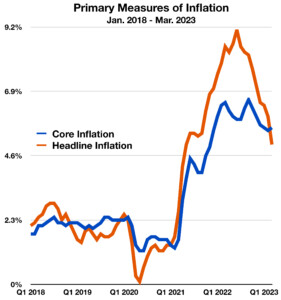 ates throughout the 1990s and 2000s. Ultimately, this makes the Federal Reserve’s battle against inflation much more complicated, as their efforts of reducing hiring to lower inflation have still not proven effective. Historically, low unemployment rates tend to drive inflation higher, and with the recent cooling of inflation data, these historic lows are not expected to last. Sources: U.S. Bureau of Labor Statistics, Federal Reserve Bank of St. Louis