John Rathnam, CFA
Rathnam Capital
50 Catoctin Cir, NE, Suite 101
Leesburg, VA 20176
703.245.6662
| Dow Jones | 48,892 |
| S&P 500 | 6,939 |
| Nasdaq | 23,461 |
| 2 Yr Treasury | 3.52% |
| 10 Yr Treasury | 4.26% |
| 10 Yr Municipal | 2.62% |
| High Yield | 6.52% |
| Dow Jones | 1.73% |
| S&P 500 | 1.37% |
| Nasdaq | 0.95% |
| MSCI-EAFE | 5.22% |
| MSCI-Europe | 4.46% |
| MSCI-Pacific | 6.91% |
| MSCI-Emg Mkt | 8.86% |
| US Agg Bond | 0.11% |
| US Corp Bond | 0.18% |
| US Gov’t Bond | 0.0% |
| Gold | 4,909 |
| Silver | 85.25 |
| Oil (WTI) | 65.74 |
| Dollar / Euro | 1.19 |
| Dollar / Pound | 1.38 |
| Yen / Dollar | 153.13 |
| Canadian /Dollar | 0.73 |
Macro Economic Overview
The beginning of the trading year in the financial markets exhibited volatility and uncertainty surrounding the Federal Reserve’s stance on inflation, implication of new tariffs, and a sudden sell off in Japanese government bonds. International trade and commerce focused on the dollar’s direction and how markets would react to a change in global currency dynamics.
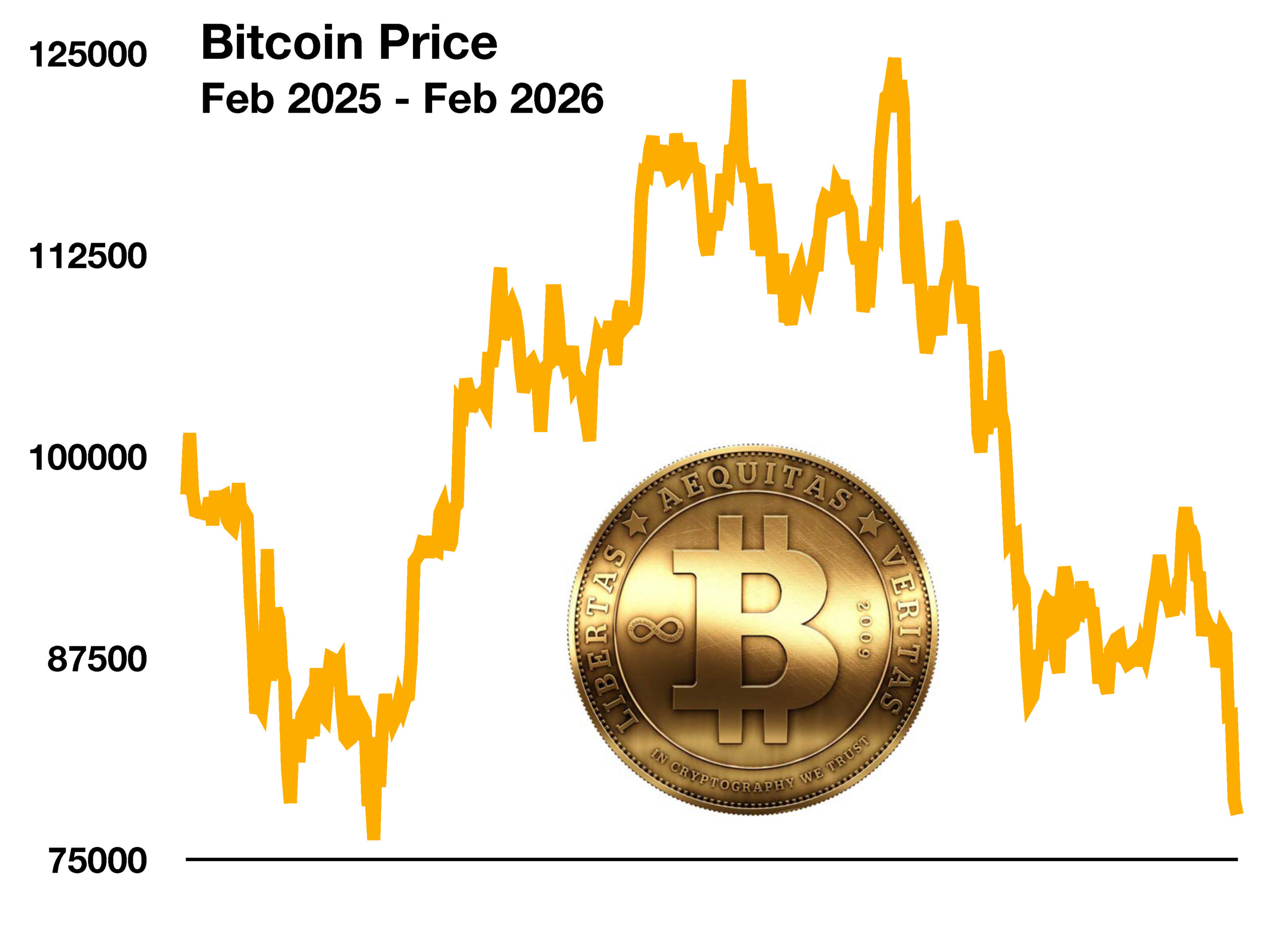
Cryptocurrencies have shed over 40% of their value since reaching highs in late 2025, exposing the fragility of the digital currency market. Tremendous leveraging or borrowing against digital currency positions has led to continued selling in order to stem the exposure to further losses. Gold and silver have become indirectly affected by crypto’s decline as the metals’ use as a hedge has also faltered.
Manufacturing activity in the U.S. expanded in January at the fastest pace since 2022, propelled by growth in new orders and production. Industries seeing increased expansion include fabricated metals, transportation equipment, and machinery. Some companies have been integrating AI and automated functions into production, alleviating the need to hire additional workers.
Analysts are keeping a close eye on how much money technology companies are spending on AI expansion. It is estimated that over $500 billion has been spent on AI infrastructure investment by the largest technology companies thus far. The question analysts have is when will these massive investments in AI pay off for companies.
Federal Reserve officials decided to hold off on further rate cuts in January, citing stable economic conditions and a resilient labor market. Lower rates are still part of the Fed’s trajectory, yet at a slower pace than had been expected by financial markets and corporations.
Newly effective tax deductions for 2026 will change how much employees withhold on their paychecks. Larger than average tax refunds are expected as taxpayers benefit from lessened tax liabilities. Modifications to W4s are recommended for taxpayers in order to stem excessive tax withholdings for the year.
Japan’s prime minister is expected to forge optimal trading arrangements with the U.S. and other countries. International markets and economists expect the country’s economy to expand due to additional government spending, tax cuts, and a weaker yen benefiting exports.
Employers are becoming increasingly cautious about new hires and employee count expansion. Government data from the end of 2025 indicated that hiring and wage increases were on a downward trend heading into 2026. Workers are becoming hesitant in seeking higher paying jobs and are more apt to stay with their existing positions. Certain occupations are being affected by the implementation of AI, as some companies transition to increased automation.
Sources: Federal Reserve, Department of Labor, Bloomberg, FRED
Stocks Start The Year With Some Uncertainty – Domestic Equity Overview
Equities began the year with some turbulence, as a depreciating dollar and uncertainty surrounding the future of tariffs resulted in certain sectors underperforming relative to others. Technology and financials faltered in January, while communication, industrials and energy stocks outperformed.
The technology heavy Nasdaq Index saw the most volatility in January, as larger tech company stock prices pulled back due to concerns about extensive expenditures on AI implementation. A gravitation to non tech companies, as well as consumer oriented and value stocks occurred during the month of January. (Sources: S&P, Dow Jones, Nasdaq)
Fed On Hold – Fixed Income Update
The Fed decided to hold off on lowering its key rate in January, citing a stable job market and improving economy. Numerous economists differed with the Fed’s reasoning, arguing that the Fed may be relying on data thought to be faulty due to the recent government shutdown and non reliable data collection methods. Elevated rates continue to hamper consumers, especially those forced to borrow funds in order to meet financial obligations.
Japanese government bond yields spiked temporarily during a “flash crash” in January, signaling a concern with the country’s financial stability and ability to pay the government’s outstanding debt. Liquidity involving debt belonging to various governments has been coming into question over the past few months. (Sources: Fed, Treasury Dept., Bloomberg)
Leading Economic Indicators Alter Direction – Domestic Economy
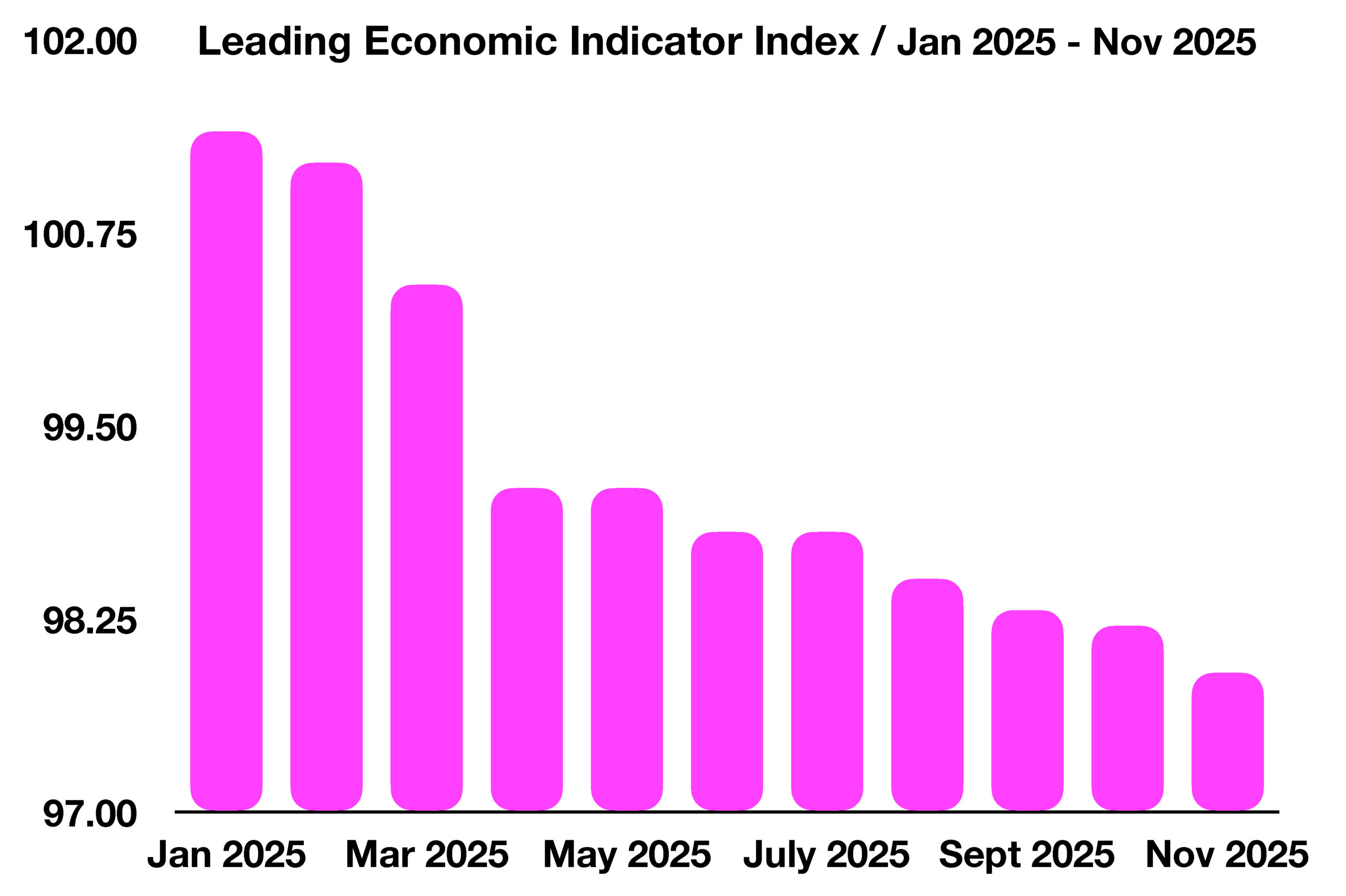
Economists and analysts closely follow indicators of where the economy might possibly be heading, also known as leading economic indicators (LEIs). The multiple statistics used have historically identified upcoming trends, offering a hint of what to expect from economic growth and the macro environment.
Some of the metrics used include manufacturing activity, housing and construction, financial markets, employment, and consumer credit usage. These indicators have historically identified macro changes in the U.S. economy by roughly 3-12 months in advance. As of the beginning of the year, the most widely recognized index known as the Conference Board Leading Economic Index which tracks 10 key leading indicators fell more than expected at the end of 2025, surpassing the decline suffered in 2020 due to the pandemic.
Previous declines of the index have revealed that a recessionary environment was present or expected to occur, such as with drops in 2000, 2008, and 2020. The metrics behind the index have changed rapidly in either direction over the years. (Source: The Conference Board)
What The Labor Market Is Telling Us – Employment Dynamics Overview
Employers were hesitant to hire and post new positions in 2025, creating challenges for workers looking for a job. The trend since 2022 in the employment market has been an acceleration of less job openings and fewer new hires across all sectors of the economy.
The December data also suggest the labor market remained fragile at the end of the year, and the outlook for hiring is dismal. Economists see another year of limited job opportunities and cooling pay gains, likely exacerbating affordability concerns among workers.
Poor government data collection since the onset of the pandemic in 2020 shuttered traditional methods of surveying businesses and identifying the health of the labor market. Economists and analysts have been increasingly relying on private data from major payroll and employment companies.
Source: Dept. of Labor
Why Cryptocurrency Has Fallen – Digital Currency Market
Cryptocurrencies have seen a dramatic slide from their highs achieved in the third quarter of 2025, with Bitcoin, the largest and most widely held digital currency, having lost over 45% of its value. Deleveraging has been the primary cause of the crypto market’s latest descent, as investors who had borrowed against crypto holdings have sold positions in order to reduce leveraged or borrowed exposure.
Some analysts believe that the recent sell off may affect the metals market as well, since a growing number of crypto ETFs and similar investment products have been buying gold and silver as a hedge against volatility. The risk is that when deleveraging occurs, metals backing crypto are also sold in order to close out borrowed exposure.
Cryptocurrencies have started to behave more like speculative assets, rather than a hedge against stock market volatility and an alternative investment. Recent geopolitical events, including possible global conflicts and a falling U.S. dollar, are believed to have also been a catalyst for the decline in the crypto market.
Sources: Federal Reserve Bank of St. Louis, Bloomberg
Global Stock Market Capitalization – Global Equity Market Overview
Stock markets throughout the world have fluctuated over the decades, either shedding or capturing valuations as equities have increased and decreased in value. Several factors influence stock valuations of countries, including economic expansion, currencies, interest rates, and demographics.
The U.S. equity markets, which includes all of the stocks on the NYSE, Nasdaq and affiliate exchanges, have had the largest valuations for over 120 years. Even during the 1929 crash and the Great Depression that followed, the U.S. stock market was able to sustain its position as the largest equity market worldwide.
From 1988 to 1990, Japan’s stock market was the largest market globally, exceeding total U.S. stock market valuations for a brief period. Japan’s expanding economy as well as the U.S. market crash of 1987, propelled stock market valuations in Japan during the late 1980s.
Sources: Bloomberg, Japan Exchange Group, S&P, Treasury Dept.
Tax Withholding Changes To Consider For 2026 – Tax Planning
Recently enacted tax legislation is creating the need for taxpayers to reduce withholdings from their existing paychecks. It is expected that refunds this tax year will be about $1,000 greater on average, with upper income taxpayers seeing even larger refunds.
A misconception for years has been that getting a sizable tax refund is good, but in actuality it means that you’ve lent the government money and you’ve withheld too much. The challenge calculating withholdings is estimating how much to withhold after tax credits and deductions.
Newly available deductions for 2026 may affect withholding calculations due to lessened tax liabilities. New deductions include the 65 and older taxpayer credit, deduction on tips, and overtime income deduction. For homeowners, the cap on state and local tax deductions (SALT) has increased from $10,000-$40,000, also affecting withholding calculations.
It is suggested to submit a new W-4 to update withholdings in order to minimize the chance of a large refund. The IRS has updated its worksheet for the W-4 withholding calculations to include the newly available deductions. It’s also important to note that underpayments may result in penalties by the IRS with a charge of 7% interest on estimated tax underpayments. (Sources: IRS, Tax Policy Center)