W.P. "Bill" Atkinson, III
Certified Financial Planner TM / Attorney
Access Financial Resources, Inc.
3621 NW 63rd Street, Suite A1
Oklahoma City, OK 73116
(405) 848-9826
| Dow Jones | 52,319 |
| S&P 500 | 7,499 |
| Nasdaq | 26,213 |
| 2 Yr Treasury | 4.14% |
| 10 Yr Treasury | 4.44% |
| 10 Yr Municipal | 2.89% |
| High Yield | 6.99% |
| Dow Jones | 8.85% |
| S&P 500 | 9.55% |
| Nasdaq | 12.79% |
| MSCI-EAFE | 7.74% |
| MSCI-Europe | 5.92% |
| MSCI-Far East | 12.84% |
| MSCI-Emg Mkt | 22.68% |
| US Agg Bond | 0.61% |
| US Corp Bond | 0.85% |
| US Gov’t Bond | 0.49% |
| Gold | 4,010 |
| Silver | 58.85 |
| Oil (WTI) | 70.08 |
| Dollar / Euro | 1.14 |
| Dollar / Pound | 1.32 |
| Yen / Dollar | 161.86 |
| Canadian /Dollar | 0.70 |
Renewed hostilities between Iran and the United States heightened geopolitical tensions and unsettled financial markets in early July. The durability of the June 18 agreement between the two countries remains a key factor in the outlook for oil and energy prices. The agreement was intended to end the conflict and reopen the Strait of Hormuz, which had been effectively closed since late February.
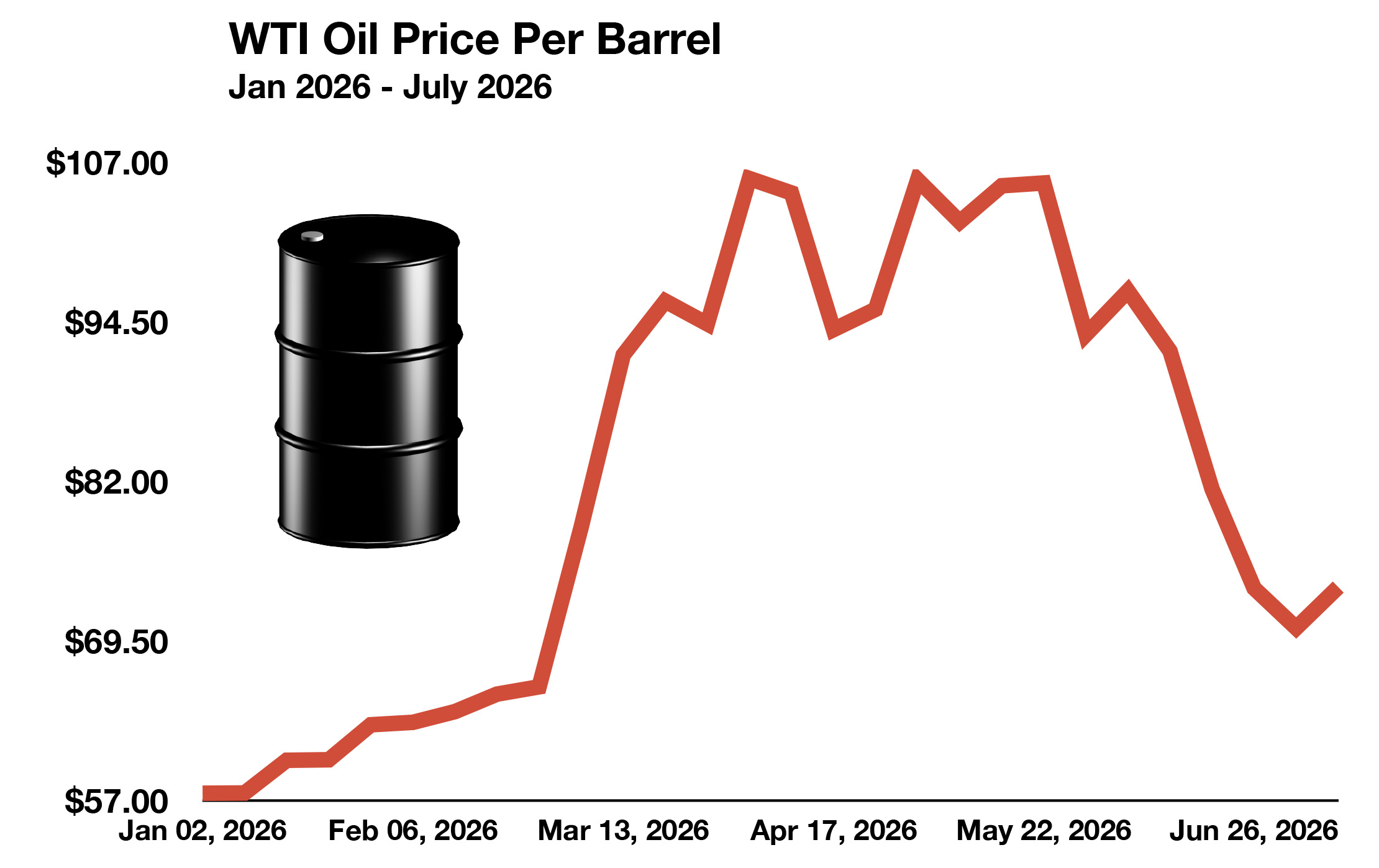
Oil prices declined sharply after the agreement was announced and shipping traffic through the Strait began to recover. Brent crude averaged approximately $85 per barrel in June, down $22 from May and $32 from its April peak. Prices briefly fell below $70 per barrel on July 1 before renewed tensions pushed them higher. Iran is also struggling to restore exports and regain market share, while increased traffic through the Strait is allowing regional production and deliveries to gradually recover.
Iran has continued to assert authority over shipping through the Strait of Hormuz, creating uncertainty over passage rights and the stability of the agreement. Any renewed disruption could reduce global oil supplies and quickly push energy prices higher. Relaxing sanctions could allow more Iranian oil to return to conventional international markets rather than being sold through intermediaries and discounted transactions.
The Japanese yen weakened to approximately ¥162 per U.S. dollar, its lowest level in nearly 40 years. The decline has raised the cost of imported energy, food, and other goods, adding to inflationary pressure. The Bank of Japan raised its policy rate to approximately 1% in June, while officials continued to consider additional measures to address currency weakness.
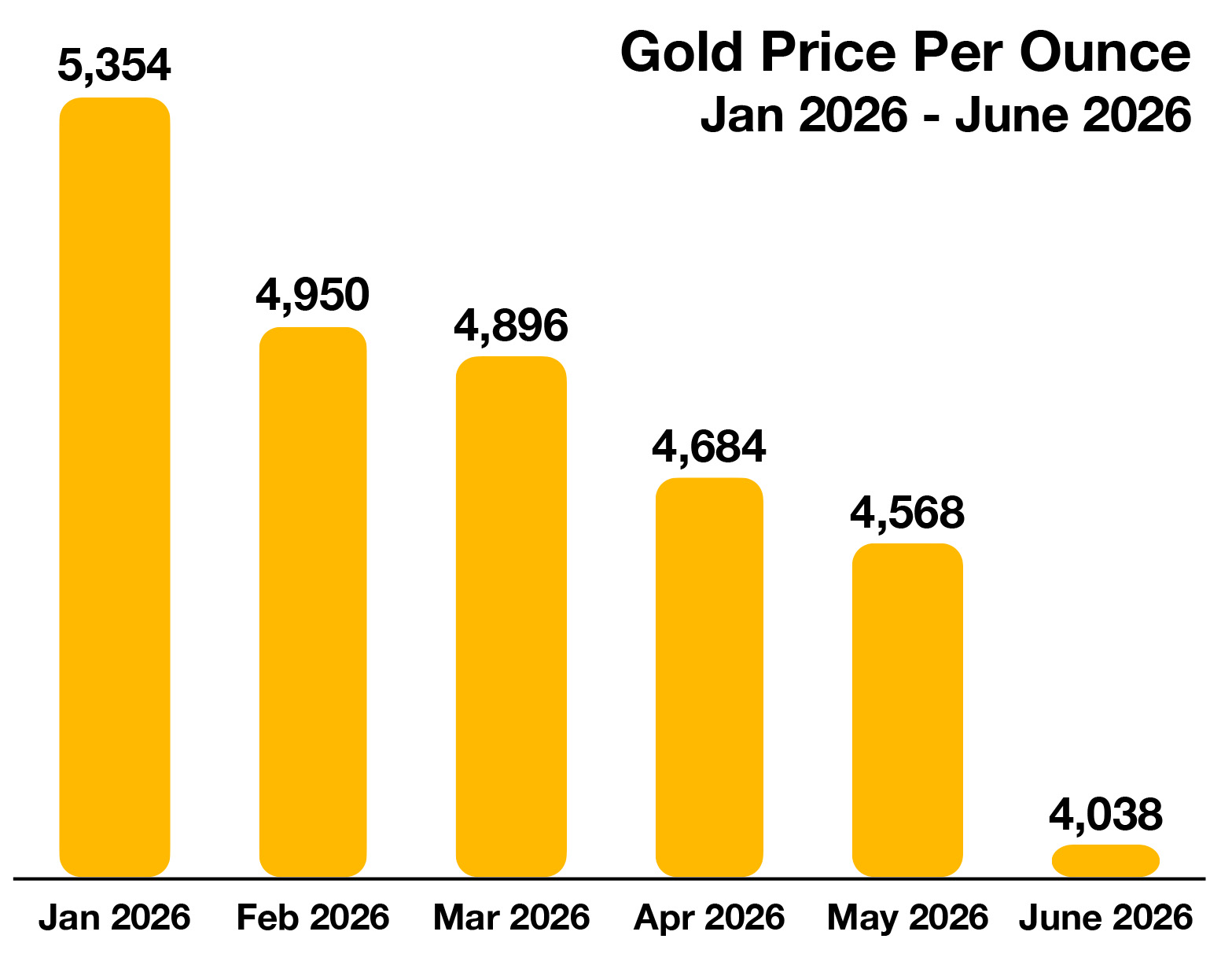
Gold also declined during June and traded more than 20% below its January high in early July. Despite the pullback, gold remains widely used as a hedge against inflation, currency depreciation, and geopolitical instability, making it an important indicator of investor sentiment.
The Federal Reserve maintained the federal funds target range at 3.50% to 3.75% on June 17. Lower oil prices and a weakening labor market could eventually support rate reductions, although inflation remains a significant concern. The June meeting minutes indicated that market participants generally expected rates to remain unchanged through early 2027.
China demonstrated its expanding strategic capabilities on July 6 by launching a long-range ballistic missile from a nuclear-powered submarine into the Pacific Ocean. The missile carried a dummy warhead, but the test highlighted China’s ability to launch strategic weapons from beneath the ocean and reach distant targets.
Trump Accounts were officially launched on July 4, 2026. Eligible children born between January 1, 2025, and December 31, 2028, may receive a one-time $1,000 Treasury contribution to a tax-advantaged investment account. The funds may be invested in qualified index funds for long-term growth.
Continued oil-price volatility remains a major source of market uncertainty. Lower prices can ease inflation and reduce transportation costs, while renewed military escalation or shipping disruptions could quickly reverse those benefits and complicate the outlook for economic growth and interest rates.
Sources: U.S. Energy Information Administration, Federal Reserve, U.S. Department of the Treasury, Bank of Japan, Reuters, Associated Press, and U.S. Naval Institute News.
A resolution of the conflict with Iran was expected to ease inflation concerns and support lower mortgage and consumer-loan rates. The average 10-year U.S. Treasury yield edged down from 4.48% in May to 4.47% in June but remained elevated amid continued economic strength and inflation uncertainty.
At its June meeting, the Federal Reserve maintained the federal funds target range at 3.50% to 3.75%. Officials remain divided as they weigh energy prices, inflation, economic growth, and labor-market conditions. Renewed hostilities with Iran and higher oil prices could complicate the outlook for future rate reductions. Freddie Mac reported that the average 30-year fixed mortgage rate was 6.49% for the week ending June 25, still below its long-term average of approximately 7.7% since 1971. Sources: U.S. Department of the Treasury, Federal Reserve, and Freddie Mac
Major U.S. equity indices advanced around the June peace agreement as lower oil prices and reduced geopolitical risk improved investor sentiment. The S&P 500 rose nearly 6% between the April and June Federal Reserve meetings, led primarily by technology stocks and stronger earnings expectations.
Lower fuel prices can reduce inflation, transportation expenses, and operating costs, potentially improving corporate profit margins. Renewed hostilities in early July, however, pushed oil prices higher and reintroduced inflation and geopolitical concerns. Sector performance remains uneven. Healthcare and biotechnology have attracted greater investor interest, while technology continues to drive broader index performance. Sources: S&P Dow Jones Indices, Federal Reserve, Dow Jones, Bloomberg, and Reuters

Oil prices declined sharply after peaking in April and following the June agreement with Iran. Brent crude averaged approximately $85 per barrel in June, down $22 from May and $32 from its April peak, before renewed hostilities placed upward pressure on prices. The U.S. Energy Information Administration projects that lower crude prices could reduce average retail gasoline prices by approximately 41 cents per gallon in the third quarter compared with the second quarter. Lower gasoline and diesel prices would ease inflationary pressure and reduce costs for consumers and businesses.
Motor fuel accounts for approximately 3% of the Consumer Price Index, but energy prices also affect the cost of food and other goods transported throughout the country. Continued oil-price volatility therefore remains an important risk to inflation, interest rates, and economic stability. Sources: U.S. Energy Information Administration, Bureau of Labor Statistics, Department of Labor, and Department of Transportation
At midyear, it is wise to review retirement plan contributions and applicable limits to ensure contributions remain on track.
Beginning in 2026, participants age 50 or older whose 2025 FICA wages from the employer sponsoring the plan exceeded $150,000 must make their 401(k) catch-up contributions as Roth contributions. Participants with wages of $150,000 or less may generally continue making catch-up contributions on either a pretax or Roth basis, depending on the plan’s provisions.
The regular employee deferral limit for 2026 is $24,500. The catch-up contribution limit is $8,000 for participants age 50 or older. Participants who turn ages 60 through 63 during 2026 may contribute an enhanced catch-up amount of $11,250 if permitted by the plan.
The Roth requirement applies only to catch-up contributions, not regular salary deferrals. Eligibility is based on the participant’s prior-year FICA wages from the employer sponsoring the plan. If a plan does not permit Roth contributions, affected participants generally cannot make catch-up contributions unless the plan is amended to add a Roth option.
Source: Internal Revenue Service
Trump Accounts are a new federal investment program intended to help children begin accumulating long-term savings. The accounts began accepting contributions on July 4, 2026.
Eligible U.S. children born between January 1, 2025, and December 31, 2028, may receive a one-time $1,000 contribution from the U.S. Treasury. That contribution may remain invested along with future contributions from parents, family members, employers, charities, and other eligible sources.
The accounts are designed to encourage long-term investing by providing early exposure to low-cost funds that track qualified U.S. stock-market indexes. Beginning early allows even modest contributions to potentially grow over several decades through compound growth and tax-deferred accumulation.
A parent or guardian generally serves as custodian until the child reaches age 18. At that time, the account becomes the child’s property and generally operates under rules similar to those governing a traditional IRA. Withdrawals may be made, but applicable income taxes and early-distribution rules may apply depending on how the funds are used.
Eligible contributors may contribute a combined total of up to $5,000 annually per child. Account assets are generally limited to certain low-cost funds tracking broad U.S. stock-market indexes, and withdrawals are restricted before age 18.
Growth illustrations and additional program information are available at TrumpAccounts.gov.
Sources: U.S. Department of the Treasury and TrumpAccounts.gov
Gold declined for two consecutive months after reaching a record high in January. Front-month gold futures reached approximately $5,318 per ounce on January 29 before falling to about $4,000 by the end of June, a decline of roughly 25%. 
Geopolitical concerns surrounding the conflict with Iran helped drive demand for gold earlier in the year. Inflation concerns and currency uncertainty also increased its appeal, even though gold produces no interest or dividend income. Gold is commonly viewed as a store of value during periods of financial or geopolitical instability.
Gold has historically been used to hedge against inflation, political instability, and declining confidence in currencies. However, most modern currencies are not backed by gold. Instead, gold derives much of its monetary value from its scarcity, durability, liquidity, and broad international acceptance. Gold has been valued for thousands of years. Ancient civilizations used it for jewelry, decorative objects, trade, and early forms of money. Today, gold is used in jewelry, electronics, dentistry, medicine, aerospace, and manufacturing. Central banks also continue to hold gold as part of their foreign-exchange reserves. Sources: World Gold Council, London Bullion Market Association, Bloomberg, and Dow Jones Market Data
The decision to claim Social Security depends largely on health, cash-flow needs, expected longevity, employment, and the value of receiving a larger guaranteed monthly benefit by waiting. Benefits may begin as early as age 62, but claiming before full retirement age permanently reduces the monthly payment. For people born in 1960 or later, full retirement age is 67. Benefits increase by approximately 8% for each full year they are delayed beyond full retirement age, with increases ending at age 70. Claiming early may make sense for someone who needs immediate income or expects a shorter lifespan, while delaying may benefit someone seeking a larger lifetime income stream. Those who claim before full retirement age and continue working may have benefits temporarily withheld if earnings exceed the annual limit. The withheld benefits are later reflected in a higher monthly payment after full retirement age. Social Security benefits may also be subject to federal income tax when combined income exceeds applicable thresholds. Married individuals should also consider spousal and survivor benefits. A worker’s claiming decision may affect the survivor benefit ultimately available to a spouse, making coordinated planning particularly important for married couples. Source: Social Security Administration