Aspen Wealth Management, Inc.
9300 W. 110th Street, Suite 680
Overland Park, KS 66210
913.491.0500
| Dow Jones | 52,319 |
| S&P 500 | 7,499 |
| Nasdaq | 26,213 |
| 2 Yr Treasury | 4.14% |
| 10 Yr Treasury | 4.44% |
| 10 Yr Municipal | 2.89% |
| High Yield | 6.99% |
| Dow Jones | 8.85% |
| S&P 500 | 9.55% |
| Nasdaq | 12.79% |
| MSCI-EAFE | 7.74% |
| MSCI-Europe | 5.92% |
| MSCI-Far East | 12.84% |
| MSCI-Emg Mkt | 22.68% |
| US Agg Bond | 0.61% |
| US Corp Bond | 0.85% |
| US Gov’t Bond | 0.49% |
| Gold | 4,010 |
| Silver | 58.85 |
| Oil (WTI) | 70.08 |
| Dollar / Euro | 1.14 |
| Dollar / Pound | 1.32 |
| Yen / Dollar | 161.86 |
| Canadian /Dollar | 0.70 |
Macro Overview
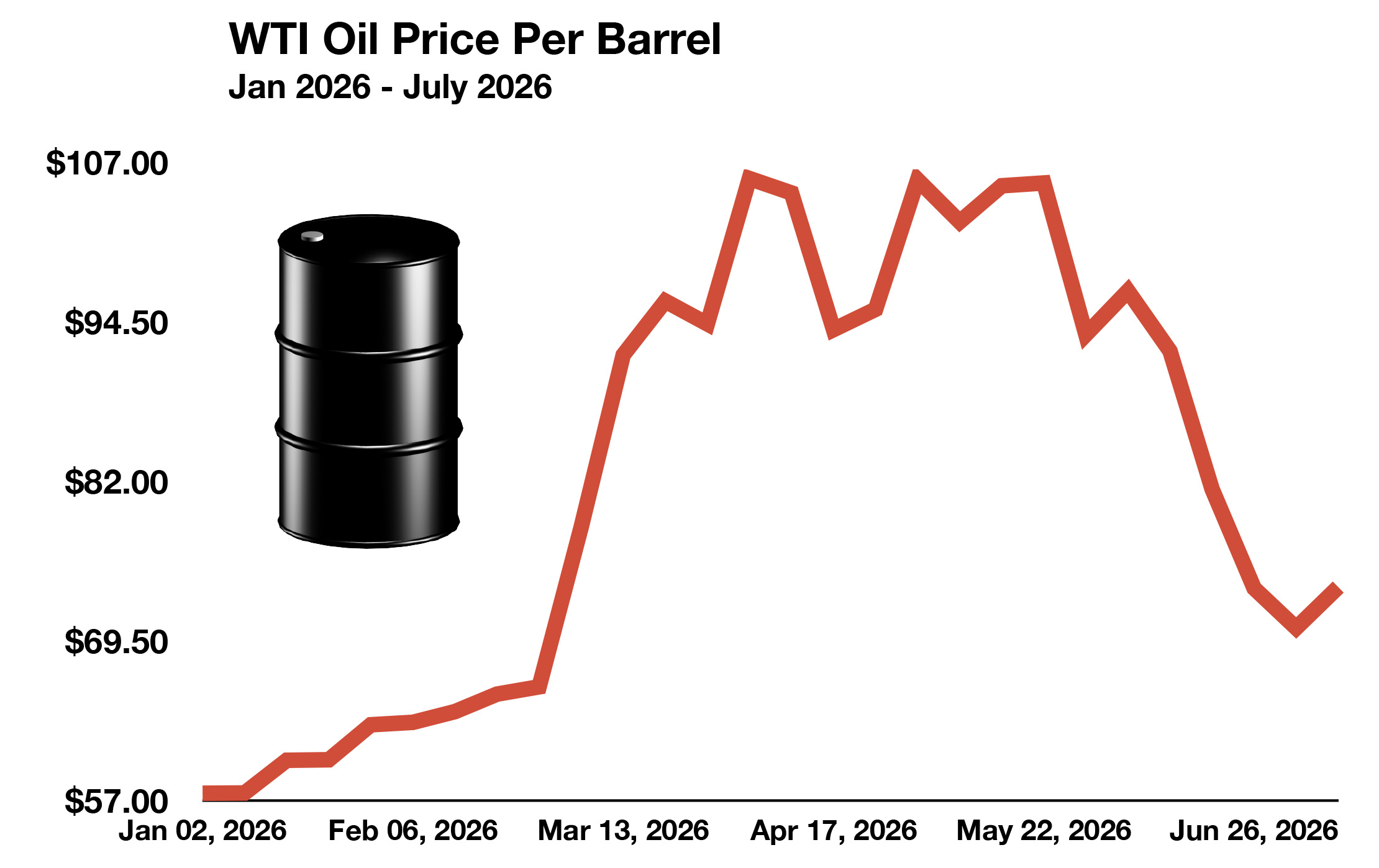
Renewed tensions between the United States and Iran weighed on investor sentiment during the opening weeks of July, reinforcing geopolitical risk as a key driver of energy markets. The durability of the ceasefire remains central to the near-term outlook for oil prices. Following the initial peace agreement, West Texas Intermediate (WTI) crude declined from $112.95 per barrel in April to $69.50 in June, its largest quarterly decline since 2020. However, renewed hostilities in early July pushed prices higher once again, underscoring the sensitivity of energy markets to geopolitical developments. Continued volatility in oil prices remains a source of uncertainty for businesses and financial markets, complicating cost forecasts and inflation expectations.
Iran continues to face challenges restoring oil export volumes and regaining lost market share, as China has increasingly shifted purchases toward lower-cost crude from the United Arab Emirates and Iraq. Although the reopening of the Strait of Hormuz has supported global supply flows, ongoing disputes over shipping rights highlight the fragility of the ceasefire and the risk of future supply disruptions. Potential sanctions relief could enable Iran to resume legal oil exports through U.S. dollar-based transactions, reducing reliance on informal trade channels that have primarily supported Chinese demand. With approximately 80% of global oil transactions conducted in U.S. dollars, the currency remains central to global energy markets.
Elsewhere, the Japanese yen weakened to its lowest level since 1986 as policymakers weighed additional monetary tightening to support the currency. Continued depreciation has increased import costs and contributed to inflationary pressures within Japan.
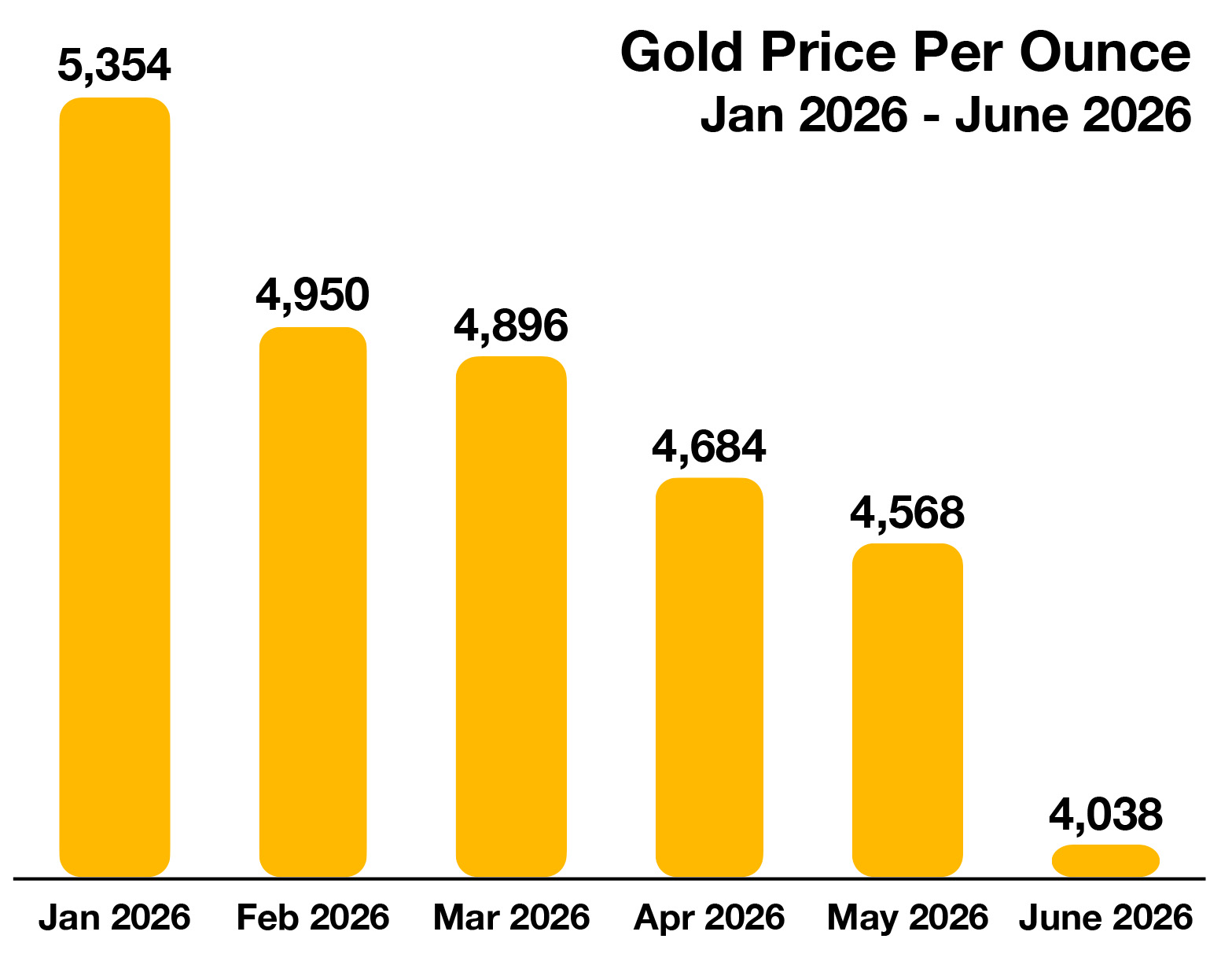
Gold prices have retreated approximately 30% from their January peak, reflecting moderating inflation expectations, improved risk sentiment, and a stronger U.S. dollar. As a traditional inflation hedge and safe-haven asset, gold remains a useful indicator of investor risk appetite.
Federal Reserve officials continue to express differing views on the path of monetary policy. However, softer energy prices and signs of labor market moderation could strengthen the case for policy easing later this year.
Geopolitical risks remain elevated in the Asia-Pacific region following China’s rare long-range ballistic missile launch from a nuclear-powered submarine. The test highlights China’s expanding strategic capabilities and reinforces ongoing regional security concerns.
New legislation also established Trump Accounts, tax-deferred investment accounts for U.S. children under age 18. Beginning July 4, 2026, eligible children born between 2025 and 2028 will receive an initial $1,000 government contribution designed to promote long-term investment and savings.
Sources: IEA, Fed, U.S. Treasury, trumpacccounts.gov
Fed Officials Mixed On Rate Direction – Fixed Income Overview
Numerous analysts expected that a successful resolution to the conflict with Iran would help bring about a lower rate environment, leading to lower mortgage rates and consumer loan rates. U.S. Treasury yields slightly fell in June as inflationary concerns eased and certain Fed members signaled that rate increases were not a certainty as this point. Markets are concerned that a return to hostilities with Iran may hinder a lower rate trajectory.
Fed officials are increasingly mixed surrounding the direction of rates and how to interpret the effects of the Iranian conflict and the labor market. Growing uncertainty has several Fed members “on the fence” as to what direction the macro environment may head.
Regardless of the current elevated interest rate environment, mortgage rates are still below their 55 year average of 7.68% for a 30 year fixed conforming loan, with a rate of 6.49% at the end of June.
Sources: Treasury Dept., FreddieMac, Federal Reserve
Equities Veer As Uncertainty Looms – Domestic Equity Overview
Major equity indices advanced in June as a peace accord fueled stocks. Leading sectors for the month included healthcare, biotechnology, pharmaceutical, and homebuilders driven by better than expected earnings and growth.
The prospect of lower oil prices stoked optimism for stocks with the anticipation of lessening inflationary pressures and lower transportation costs. Lower fuel prices is expected to minimize the burden of costly fuel, eventually translating into improved profit margins.
A rotation from technology and high growth sectors to large cap value and lower beta sectors emerged in the second quarter. Analysts are following a growing divergence among sector performance so far this year, which might indicate a fundamental change in the equity markets.
Sources: Dow Jones, S&P, Bloomberg, Reuters
Volatile Oil Prices Create Uncertainty- Energy Sector Overview

With oil falling nearly 40% from its highs in April as a result from the contentious cease fire with Iran in June, an expectation has arisen that gasoline prices will soon fall as well. An ensuing drop in gasoline and diesel prices would alleviate inflationary pressures, thus giving consumers a much needed break. Some analysts believe that if this should occur, the Fed’s stance on inflation might very well change course, perhaps in the direction of even a rate reduction towards the end of the year. Fuel consumption makes up roughly 8% of the Consumer Price Index (CPI), which measures the rate of inflation for U.S. consumers. Lower diesel and gasolines prices also affect the price of goods and products, such as food and merchandise, which are transported nationally by rail and truck.
Sources: EIA, BLS, Dept. of Labor, Dept. of Transportation
Identity Theft and Fraud Protection
One of the most effective ways individuals can protect themselves from identity theft and financial fraud is by freezing their credit with the major credit bureaus. A credit freeze restricts access to a person’s credit report, making it much more difficult for criminals to open new accounts or obtain loans using stolen personal information. Unlike fraud alerts, a credit freeze remains in place until the individual chooses to temporarily lift or remove it. To freeze credit, consumers should contact each of the three major credit bureaus individually—Equifax (www.equifax.com; 1-800-685-1111), Experian (www.experian.com; 1-888-397-3742), and TransUnion (www.transunion.com; 1-800-916-8800)—and follow the verification process to establish the freeze. If legitimate credit access is needed later, the freeze can be temporarily lifted for a specific lender or period of time.
Trump Accounts / Effective July 4th – Financial Planning For Children
These are new tax-advantaged investment accounts (similar to a special type of traditional IRA) for U.S. children under 18, established under recent legislation. They launched around July 4, 2026, with full functionality (including the official app and contributions) rolling out shortly after.
Key Details:
For the latest official info, visit trumpaccounts.gov or check IRS/Treasury resources. Note that these differ from regular bank or brokerage accounts—they’re long-term, restricted savings vehicles aimed at building generational wealth. Consult a financial advisor or tax professional for your specific situation, as there are rules on distributions and taxes.
Sources: U.S. Government, https://trumpaccounts.gov/
Gold takes a tumble – Commodity Overview
Gold has declined for two consecutive months after reaching a record high of $5,608 per ounce in February. The precious metal closed June at $4,008 per ounce, down approximately 30% from its February peak.
Gold has long been considered a safe-haven asset, often attracting investors during periods of inflation, political uncertainty, and currency volatility. While modern currencies are no longer backed by gold, central banks around the world continue to hold substantial gold reserves, reinforcing its role as a globally recognized store of value and an important component of the international financial system.
The history of gold spans thousands of years. Archaeological evidence shows it was used in jewelry as early as 2600 BC in ancient Mesopotamia, located in present-day Iraq. By around 600 BC, gold had found applications in dentistry, and its uses have continued to expand over time. Today, industries including electronics, medicine, manufacturing, aerospace, and even food production rely on gold for its unique physical and chemical properties. Beyond its industrial uses, gold remains a vital reserve asset held by central banks and governments worldwide, underscoring its enduring importance to the global economy. Sources: Congressional Research Service, Bloomberg
Considerations in Taking Social Security Before Age 70 – Social Security Benefits
The decision of when to claim Social Security benefits depends on several factors, including your health, income needs, life expectancy, and whether you would benefit from a larger guaranteed monthly payment by delaying benefits. You can begin receiving Social Security as early as age 62, but doing so permanently reduces your monthly benefit. Waiting until after your full retirement age increases your benefit through delayed retirement credits, which continue to accrue until age 70.
Claiming benefits early provides income sooner and may be appropriate if you need the additional cash flow, have a shorter life expectancy, or prefer to receive and use or invest the benefits earlier. For individuals born in 1960 or later, the full retirement age is 67. Delaying benefits beyond full retirement age increases your monthly payment by approximately 8% for each full year you wait, up to age 70.
If you are still working and earning wages, claiming Social Security before reaching full retirement age may increase the portion of your benefits subject to taxation and could temporarily reduce benefits if your earnings exceed annual limits. Delaying benefits until you retire or your earned income decreases may help improve tax efficiency, depending on your overall financial situation.
Married individuals should also consider the impact of claiming decisions on spousal and survivor benefits. The age at which you claim Social Security can affect the amount a surviving spouse may receive, making it an important factor in your overall retirement income strategy. Sources: Social Security Administration