Fortis Wealth Management

(888) 336-7847 (3FORTIS)

www.investfortis.com

July 2026
Market Update
(all values as of 06.30.2026)

Stock Indices:

Dow Jones 52,319
S&P 500 7,499
Nasdaq 26,213

Bond Sector Yields:

2 Yr Treasury 4.14%
10 Yr Treasury 4.44%
10 Yr Municipal 2.89%
High Yield 6.99%

YTD Market Returns:

Dow Jones 8.85%
S&P 500 9.55%
Nasdaq 12.79%
MSCI-EAFE 7.74%
MSCI-Europe 5.92%
MSCI-Far East 12.84%
MSCI-Emg Mkt 22.68%
 
US Agg Bond 0.61%
US Corp Bond 0.85%
US Gov’t Bond 0.49%

Commodity Prices:

Gold 4,010
Silver 58.85
Oil (WTI) 70.08

Currencies:

Dollar / Euro 1.14
Dollar / Pound 1.32
Yen / Dollar 161.86
Canadian /Dollar 0.70
 

Macro Overview

Renewed friction between Iran and the U.S. unsettled investors and heightened geopolitical tensions in early July. A fragile peace arrangement between Washington and Tehran emerged as a key barometer for the direction of global oil and energy prices before it fell apart. Crude oil posted its steepest quarterly decline since 2020 after the initial peace agreement was announced, with West Texas Intermediate (WTI) falling to $69.50 a barrel in June from $112.95 in April.

Iran is struggling to restore oil exports and recapture market share lost during the conflict. Its largest customer, China, has increasingly turned to lower-priced supplies from the United Arab Emirates and Iraq, further pressuring Iranian producers. The reopening of the Strait of Hormuz increased global supply by allowing shipments to move more freely to international buyers. At the same time, Iran continues to assert its authority over traffic through the strategic waterway. Supporters of easing sanctions argue that allowing Iran to sell oil openly in U.S. dollars would bring much of its trade into regulated markets, reducing reliance on a black market that had been largely dependent on illicit sales to China. Roughly 80% of global oil transactions are conducted in U.S. dollars.

The Japanese yen fell to its weakest level since 1986 as policymakers debated whether higher interest rates are needed to prevent further depreciation. The currency’s decline is fueling inflation and raising the cost of imported goods for Japanese consumers.

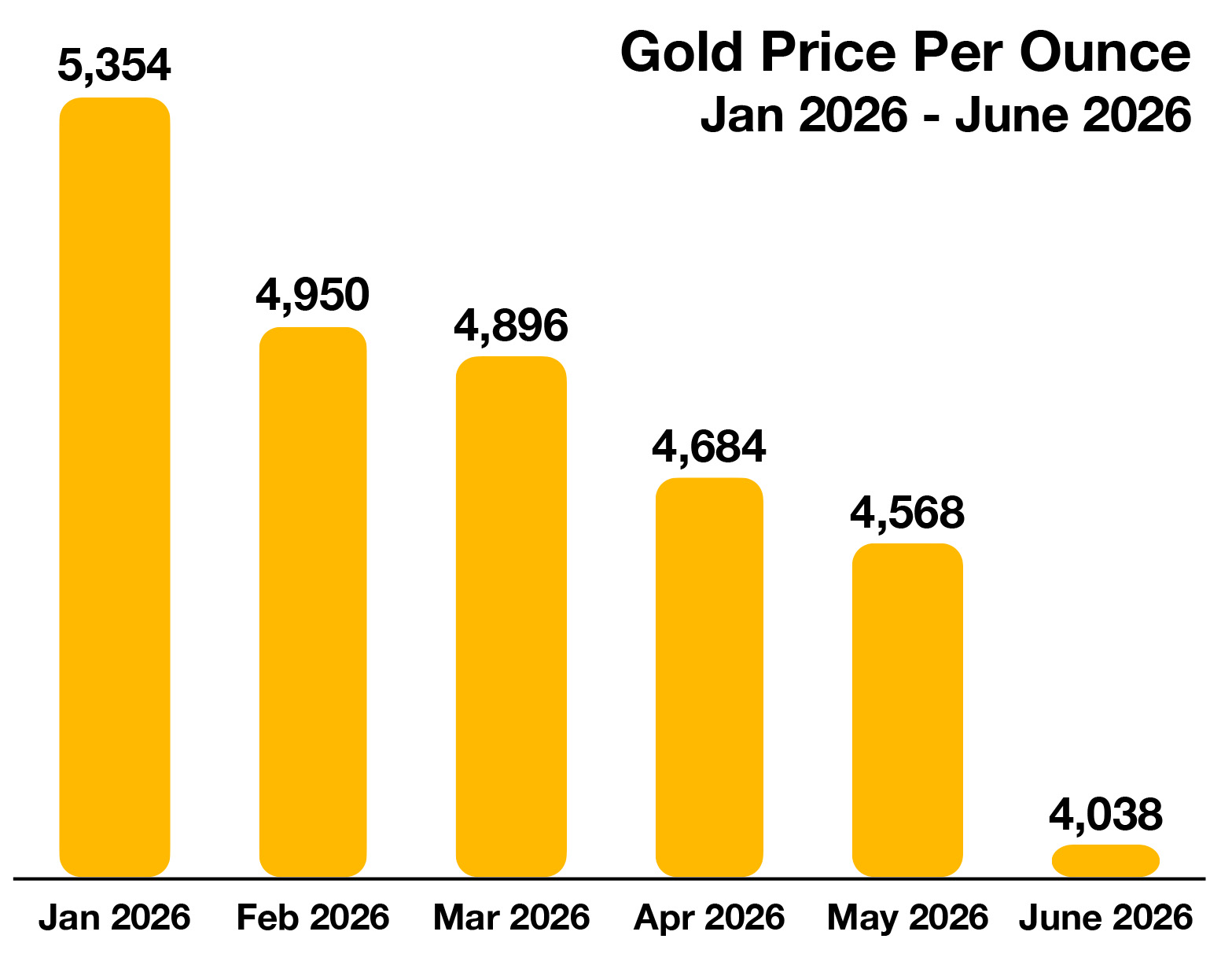
Gold edged lower in June, trading about 30% below the highs reached in January. Often viewed as a hedge against inflation and a counterbalance to currency fluctuations, gold remains a closely watched gauge of investor sentiment and economic expectations.

Federal Reserve officials remain divided on the path of interest rates. Many economists and market analysts believe that further declines in oil prices, combined with a cooling labor market, could strengthen the case for future rate cuts.

China’s latest military actions have raised new concerns after the launch of a long-range ballistic missile from a nuclear-powered submarine in the Pacific Ocean. The unusual test underscored Beijing’s growing military capabilities and its ability to project force across vast distances.

Recently enacted legislation has authorized the creation of Trump Accounts, tax-deferred investment vehicles for Americans under age 18. Officially launched on July 4, 2026, the program provides children born between 2025 and 2028 with an initial $1,000 government contribution, which will be invested for long-term growth.

Persistent swings in oil prices continue to challenge market stability and complicate budgeting and forecasting for businesses. WTI nearly doubled following the outbreak of the Iran conflict before falling more than 35% after the June peace agreement. Renewed hostilities in early July then pushed prices higher again, leaving energy markets on uncertain footing.

Sources: IEA, Fed, U.S. Treasury, trumpacccounts.gov
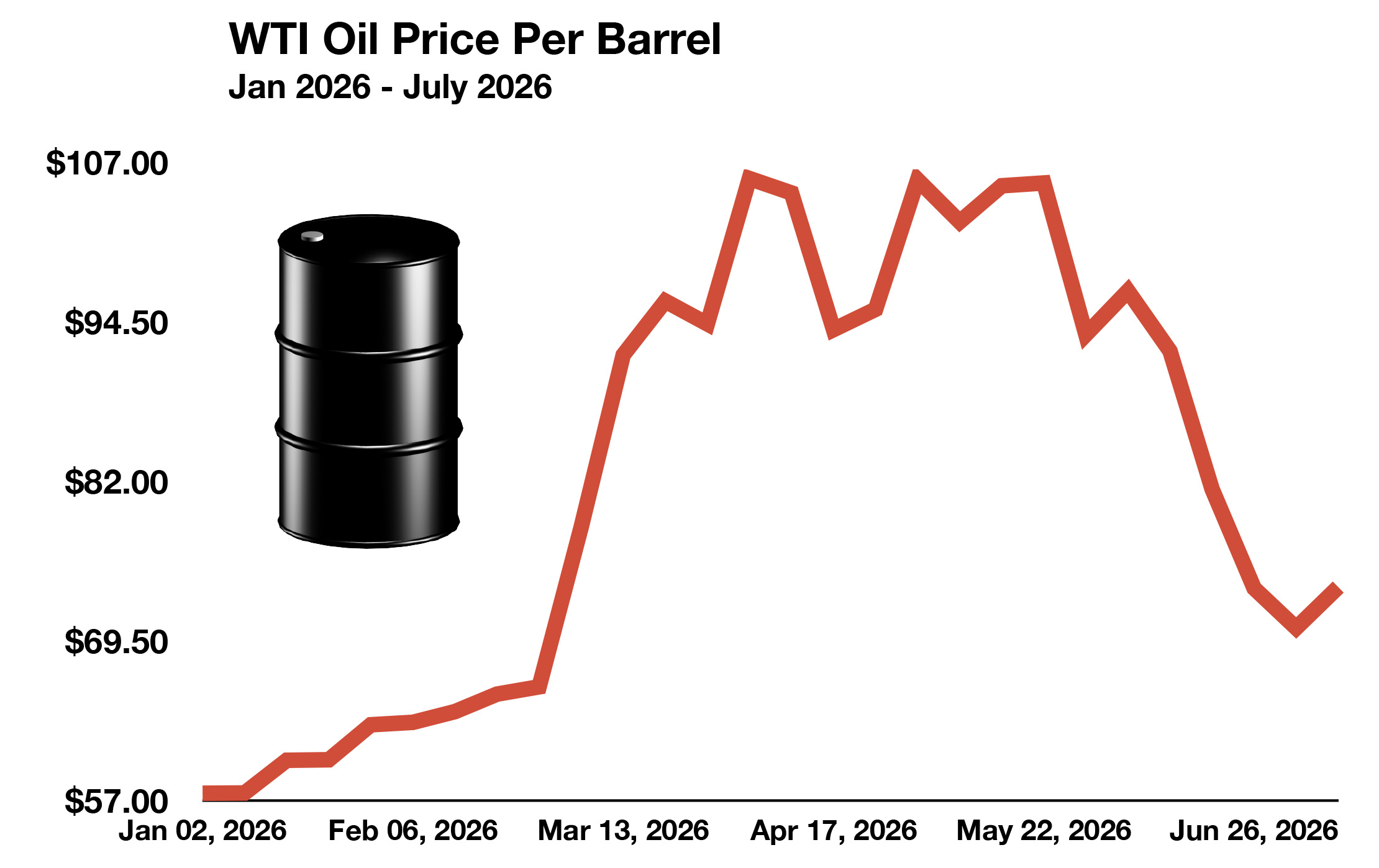
 
oil fell nearly 40% from its highs in April

Fed Officials Mixed On Rate Direction – Fixed Income Overview

Many analysts had expected that a successful resolution to the conflict with Iran would support a lower interest-rate environment, potentially reducing mortgage rates and borrowing costs for consumers. U.S. Treasury yields edged lower in June as inflation concerns moderated and several Federal Reserve officials indicated that imminent rate hikes were not assured. Investors are now concerned that renewed hostilities with Iran could disrupt that path and delay any easing in rates.

Federal Reserve policymakers remain divided over the appropriate direction of monetary policy and how to assess the economic effects of the Iran conflict alongside labor-market conditions. Heightened uncertainty has left several officials undecided, reflecting broader questions about the trajectory of the U.S. economy. Despite today’s elevated rate environment, mortgage rates remain below their 55-year historical average. At the end of June, the average rate on a 30-year fixed conforming mortgage stood at 6.49%, compared with the long-term average of 7.68%. (Sources: Treasury Dept., FreddieMac, Federal Reserve)

Equities Veer As Uncertainty Looms – Domestic Equity Overview

Major U.S. equity indices moved higher in June as optimism regarding a peace agreement supported investor sentiment. Healthcare, biotechnology, pharmaceuticals, and homebuilders led market gains, aided by stronger-than-expected earnings results and solid growth outlooks.

The prospect of lower oil prices boosted confidence in equities as investors anticipated easing inflationary pressures and reduced transportation costs. Declining fuel prices are expected to lessen a significant business expense, potentially supporting profit margins across a broad range of industries.

A shift from technology and other high-growth sectors toward large-cap value stocks and lower-volatility sectors emerged during the second quarter. Analysts continue to monitor the widening gap in sector performance this year, viewing it as a potential sign of a broader change in market leadership and investor preferences. (Sources: Dow Jones, S&P, Bloomberg, Reuters)

Volatile Oil Prices Create Uncertainty- Energy Sector Overview

With oil prices falling nearly 40% from their April highs during the fragile cease-fire agreement with Iran in June, expectations grew that gasoline prices may soon decline as well. Lower gasoline and diesel costs would help ease inflationary pressures and provide meaningful relief for consumers. Some analysts believe that if fuel prices continue to retreat, the Federal Reserve’s view of inflation could shift, potentially strengthening the case for an interest-rate reduction later in the year. Fuel accounts for roughly 8% of the Consumer Price Index (CPI), a key measure of inflation for U.S. households. Lower diesel and gasoline prices would affect the cost of goods transported across the country by truck and rail, including food, consumer products, and other essential merchandise. (Sources: EIA, BLS, Dept. of Labor, Dept. of Transportation)

 
60 to 63 year olds have an enhanced catch-up limit of $11,250 on 401ks

New Rules Surrounding 401k Catch Up Contributions in 2026 – Retirement Planning

With the year at its midpoint, now is an appropriate time to review retirement plan contributions and applicable limits to ensure savings strategies remain aligned with long-term financial goals.

Beginning in 2026, employees age 50 and older who earned at least $150,000 in FICA wages from their employer-sponsored plan in the prior year must make any eligible 401(k) catch-up contributions on a Roth basis. Employees below that income threshold generally may continue making catch-up contributions on either a pre-tax or Roth basis, subject to their plan’s available options.

For 2026, the catch-up contribution limit is $8,000 for participants age 50 and older, while the standard employee 401(k) deferral limit is $24,500. Workers ages 60 through 63 may qualify for an enhanced catch-up contribution limit of $11,250 if their employer’s plan permits the provision.

The Roth catch-up requirement applies only to catch-up contributions and does not affect regular salary deferrals. Eligibility is determined by the prior year’s wages from the same employer. In addition, employees whose plans do not offer a Roth 401(k) feature may face restrictions on making catch-up contributions under the new rule.

Source: IRS.gov

Trump Accounts Effective July 4th – Financial Planning For Children

Trump Accounts are a newly established federal investment program intended to help children begin building wealth at an early age. The accounts became eligible to receive initial contributions on July 4, 2026.

Under the program, eligible children born between January 1, 2025, and December 31, 2028, are expected to receive a one-time government contribution of $1,000. Those funds can remain invested and be supplemented over time through additional contributions from parents, family members, employers, and other eligible sources.

The program is designed to encourage long-term investing by providing children with early exposure to the U.S. equity markets through investments tied to qualified market indexes, such as the S&P 500. The underlying premise is that an earlier start gives investments more time to benefit from compound growth and tax-deferred accumulation, allowing even modest contributions to potentially grow substantially over time.

Under current law, the accounts are structured in a manner similar to traditional individual retirement accounts (IRAs), with a parent or legal guardian serving as custodian until the child reaches age 18. Once the account holder reaches adulthood, the account generally functions in a manner comparable to a traditional IRA.

Parents, relatives, employers, charitable organizations, and other eligible contributors may contribute up to $5,000 annually per child. Investment options are limited to certain low-cost index funds that track the U.S. stock market, and withdrawals generally are restricted until the beneficiary reaches age 18.

Additional growth projections and illustrative account accumulation examples are available through the U.S. government at https://trumpaccounts.gov/.

Sources: U.S. Government, https://trumpaccounts.gov/

 
gold has fallen for two consecutive months from its high of $5,626

Gold Takes A Tumble – Commodity Overview

Gold declined for a second consecutive month and remained well below its February peak of $5,626 per ounce. The metal ended June at $3,955 per ounce, representing a decline of approximately 30% from its high earlier this year.

Concerns regarding the conflict with Iran drove investors toward gold earlier in the year, helping to lift prices. Persistent inflation also increased the metal’s appeal. Although gold generates no income, it is often viewed as a store of value during periods of economic uncertainty and geopolitical tension. Gold has long served as a traditional safe-haven asset for investors seeking protection against inflation, political instability, and currency volatility. Its enduring appeal stems from its scarcity, global acceptance, and historical role as a reliable store of wealth.

Among the world’s most prized metals, gold has been used for thousands of years. Historical records indicate it was crafted into jewelry as early as 2600 BC in ancient Mesopotamia, located in present-day Iraq. By roughly 600 BC, gold had also found applications in dentistry and has since been incorporated into a wide range of industries. Today, sectors including electronics, healthcare, food production, and manufacturing utilize gold for various purposes. Its most prominent role, however, remains within the global financial system, where central banks and governments continue to hold gold as a key reserve asset. (Sources: Congressional Research Service, Bloomberg)

Considerations in Taking Social Security Before Age 70 – Social Security Benefits 

The decision of when to claim Social Security benefits largely depends on factors such as health, income needs, life expectancy, and the value of receiving a larger guaranteed benefit by delaying retirement. Benefits may begin as early as age 62, although doing so results in a permanent reduction in monthly payments. Conversely, benefits increase for those who delay claiming beyond full retirement age, with delayed retirement credits accruing until age 70. Claiming benefits early provides income sooner and may be appropriate for individuals who need additional cash flow, anticipate a shorter life expectancy, or prefer to use or invest the funds earlier. Delaying benefits generally results in a higher monthly payment. For individuals born in 1960 or later, full retirement age is 67, and benefits increase by approximately 8% for each year claiming is deferred beyond that age, up to age 70.

For individuals who remain employed and continue to earn wages, claiming Social Security before full retirement age may increase taxable income and potentially subject benefits to taxation. In many cases, delaying benefits until retirement or until earned income declines will improve overall tax efficiency. Married individuals should also consider spousal and survivor benefits when evaluating their claiming strategy, as the age at which one spouse claims benefits can affect the amount available to a surviving spouse in the future. (Source: Social Security Administration)