| Dow Jones | 49,652 |
| S&P 500 | 7,209 |
| Nasdaq | 24,892 |
| 2 Yr Treasury | 3.88% |
| 10 Yr Treasury | 4.40% |
| 10 Yr Municipal | 2.96% |
| High Yield | 6.87% |
| Dow Jones | 3.31% |
| S&P 500 | 5.31% |
| Nasdaq | 7.10% |
| MSCI-EAFE | 5.04% |
| MSCI-Europe | 2.95% |
| MSCI-Far East | 9.09% |
| MSCI-Emg Mkt | 13.94% |
| US Agg Bond | 0.07% |
| US Corp Bond | -0.09% |
| US Gov’t Bond | -0.08% |
| Gold | 4,641 |
| Silver | 74.65 |
| Oil (WTI) | 105.76 |
| Dollar / Euro | 1.16 |
| Dollar / Pound | 1.34 |
| Yen / Dollar | 159.95 |
| Canadian /Dollar | 0.73 |
Macro Overview
The most pronounced effects of the Middle East conflict on U.S. financial markets have been heightened inflation concerns, driven by elevated oil and gasoline prices, and rising Treasury yields. International markets have borne a greater impact from the conflict than U.S. markets. As the world’s largest producer of oil and natural gas, the United States has emerged as a leading global energy supplier, while many other nations have grown increasingly dependent on U.S. energy exports.
Oil lies at the center of concern surrounding the Iranian conflict, as more than 20% of global oil shipments pass through the Strait of Hormuz. Iran has threatened to target any vessel attempting to navigate the Strait, stoking fears that oil tankers could be seized or immobilized.
The attack on Iran has sent shock waves across the Middle East, affecting numerous countries amid rising risks to infrastructure and economic stability. Any escalation of the conflict could further disrupt energy markets and regional travel.
China’s involvement in the conflict has so far been limited but is expected to intensify, as more than 90% of Iran’s oil exports are sold to China, accounting for nearly 15% of China’s oil imports. China has continued to circumvent U.S. sanctions imposed in 2018 by purchasing Iranian oil, effectively in violation of those restrictions.
Prospects for Federal Reserve rate cuts have come into question as policymakers contend with renewed inflation pressures alongside weakening employment conditions. Rising inflation risks reduce the Fed’s flexibility to offset a softening labor market through lower interest rates.
Meanwhile, a federal trade-court judge ruled that the U.S. government must begin refunding more than $130 billion collected under last year’s global tariffs, which were invalidated by the Supreme Court in January. More than 1,800 U.S. companies are seeking reimbursement for tariffs paid to date.
Rising oil prices, combined with the court ruling requiring tariff refunds, have pressured Treasury bonds, pushing yields higher and prices lower. Elevated Treasury yields translate into higher borrowing costs for consumers, potentially constraining economic growth.
The Labor Department reported that the U.S. economy lost 92,000 jobs in February, defying expectations for modest job gains. The unemployment rate edged up to 4.4%, though it remains well below the pre-pandemic peak of 10% reached in October 2009. The latest data underscore ongoing weakness in a labor market that has shown limited hiring momentum in recent months.
Mounting inflation concerns alongside a weakening labor market have revived fears of stagflation, marked by rising prices and slowing economic growth. Tepid job creation and higher unemployment risk dampening consumer spending, a critical driver of economic expansion. (Sources: Dept. of Labor, Fed, U.S. Treasury, Dept. of Commerce, International Energy Agency)
Inflationary Flare Up Stirs Treasuries – Fixed Income Overview
Declining long-term yields since January have filtered into the mortgage market, with rates on a 30-year fixed loan falling below 6% in February for the first time in three and a half years, according to Freddie Mac.
Historically, global conflicts have driven investors toward Treasuries as a safe haven, cushioning markets against volatility during periods of geopolitical uncertainty. The conflict involving Iran has reversed that pattern, as rising inflation risks—stemming from potential disruptions to oil shipments through the Strait of Hormuz—have weighed on Treasury prices and pushed yields higher.
Treasuries have also faced pressure from the prospect that a prolonged conflict could compel the U.S. government to issue additional debt to help finance military operations. An increase in supply, absent a commensurate rise in demand, would likely place further upward pressure on Treasury yields.
Sources: U.S. Treasury Dept.
Rising Oil Prices Mute Market Trend – Equity Overview
U.S. stocks have stumbled at the start of the year, as lofty artificial-intelligence valuations and private-equity concerns have fueled persistent market unease. The conflict in the Middle East has added further uncertainty about the trajectory of equities. Even so, U.S. stocks have outperformed their foreign counterparts, with energy and oil shares providing a measure of stability in an otherwise fragile market.
Higher oil prices have weighed on corporate earnings, as most companies in the S&P 500 are sensitive to changes in energy costs, given oil’s role in transportation, manufacturing, and production. Inflationary pressures may also prevent the Federal Reserve from cutting rates further this year, denying companies the benefit of lower borrowing costs. Earnings results in the coming quarters will be a key barometer of the impact from the Middle East conflict, alongside persistently high fuel prices and elevated financing costs.
Sources: S&P, Bloomberg, Treasury Dept.
Consumer Delinquencies On The Rise – Household Credit & Debt Management
As the labor market continues to lose momentum and deliver only modest job growth, consumers are finding it increasingly difficult to keep up with household expenses and debt payments. Delinquencies across consumer loans—from mortgages to credit cards—rose to 4.8% of outstanding balances, the highest level since 2017.
Lower-income households and younger workers have been particularly strained, contending with persistently high prices and costly borrowing. Credit-card balances that are 90 days delinquent climbed to their highest level since 2011, while auto-loan delinquencies reached levels last seen in 2010.
The average interest rate on credit-card balances now stands near 22%, according to the Federal Reserve. Average monthly payments on new car loans exceed $700, a growing burden for many households.
Sources: Federal Reserve Bank of St. Louis
Tax Payers Seek Lower Tax States, Causing Changes In State Populations – Demographics
Rising costs for housing, insurance, electricity, and fuel have pushed tens of thousands of residents to relocate to other states in search of more affordable living. Housing costs and overall affordability have been the primary drivers of interstate migration, fueling a broader shift away from high-cost, high-tax states toward lower-cost, often lower-tax alternatives.
California stands among the most affected high-tax states, having lost an estimated 250,000 residents to other states in 2025, according to the California Department of Finance. The Tax Foundation identified 18 low-tax states that gained residents in 2024, while 17 high-tax states recorded population losses that same year. The trend has persisted into 2026, as households continue to migrate in an effort to preserve and maximize income. The widespread adoption of remote work during the pandemic accelerated this shift, reducing the importance of geographic proximity to employment.
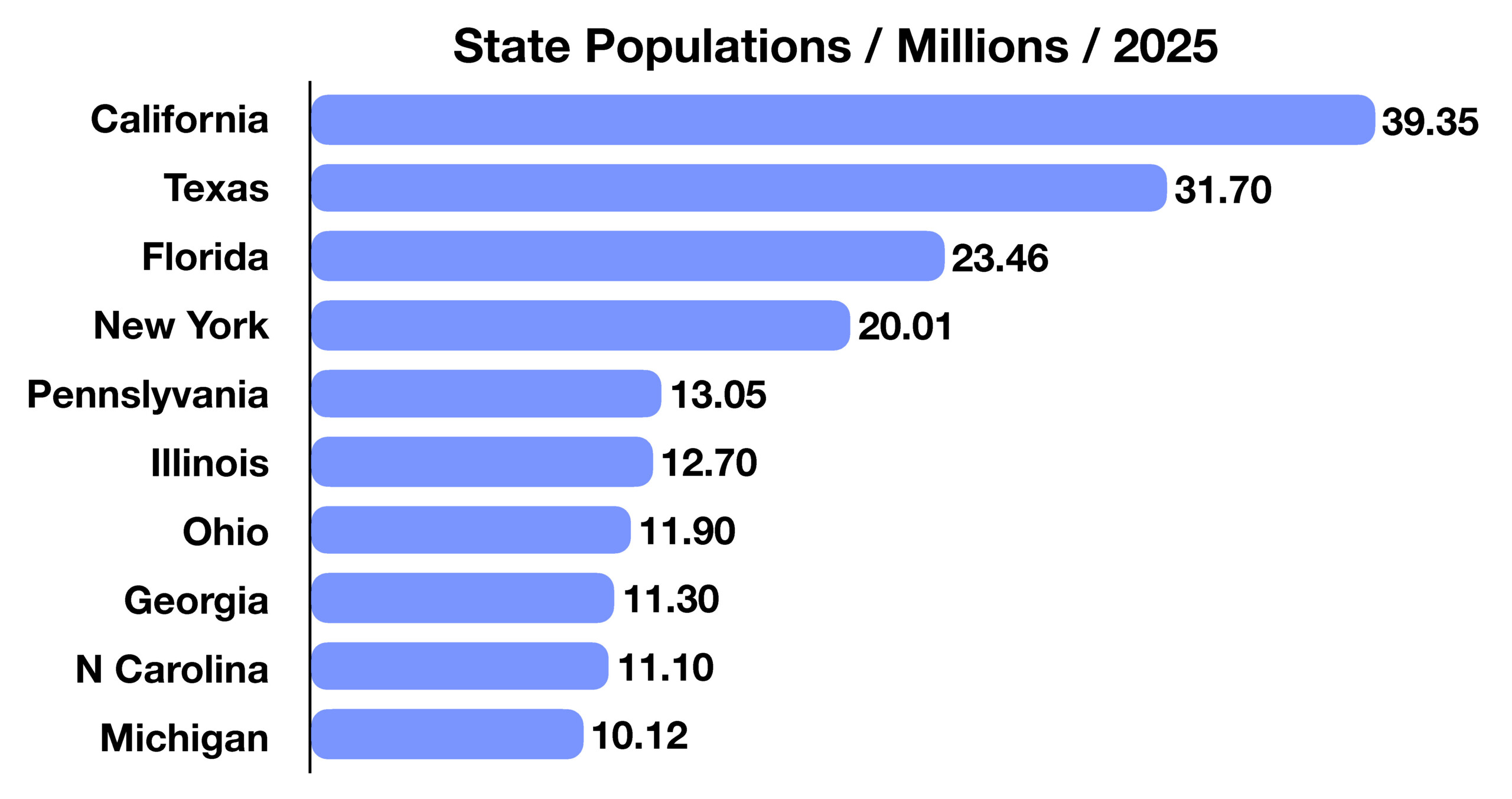
As populations shift, congressional representation may eventually be affected as seats are reapportioned among states. California, the nation’s most populous state with more than 39 million residents, stands to lose influence as other states gain. Even modest inflows into states such as Wyoming, which levies no state income tax and has a population of roughly 600,000, could have an outsized impact. (Sources: U.S. Census Bureau, California Department of Finance)
What The Fed’s Beige Book Is Telling Us – Domestic Economy
The Federal Reserve released its February economic overview, known as the Beige Book, a monthly report compiling surveys from the twelve Federal Reserve districts covering labor markets, consumer sentiment, prices, housing, manufacturing, and financial conditions.
Overall economic activity expanded at a slight to moderate pace in seven districts. Retail sales were restrained by economic uncertainty, heightened price sensitivity, and reduced spending by lower-income consumers. Auto sales declined in most districts reporting results, with affordability constraints frequently cited. Manufacturing contacts in several districts reported an increase in new orders, with some pointing to stronger demand tied to data centers and energy infrastructure. Firms across a range of industries reported turning to artificial intelligence and other forms of automation to improve efficiency, with most emphasizing productivity gains rather than workforce reductions. Several districts noted rising costs across non-labor inputs, including insurance, utilities, energy, metals, and other raw materials. Nine districts reported that tariffs contributed to higher costs, with some firms passing those increases on to customers and others beginning to do so after previously absorbing them. (Source: Federal Reserve)
World’s Largest Energy Producer Has A Buffer – Energy Markets Overview
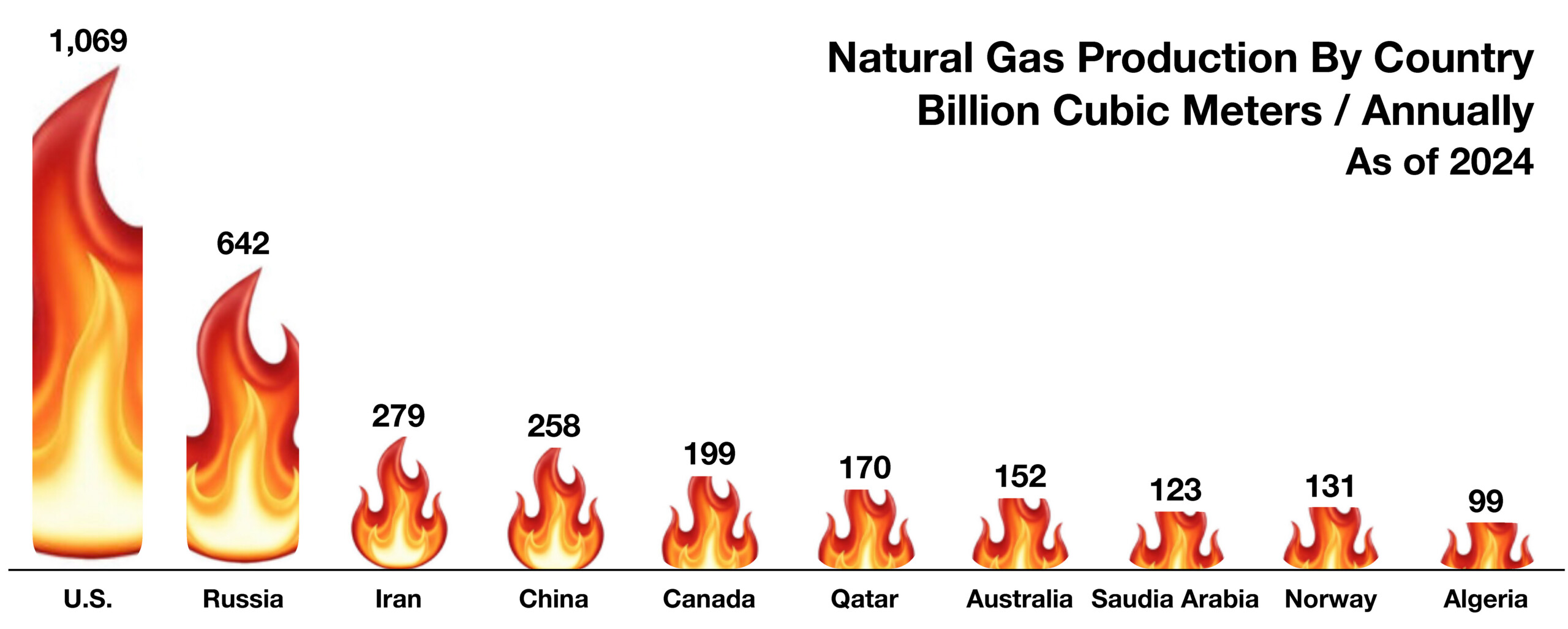
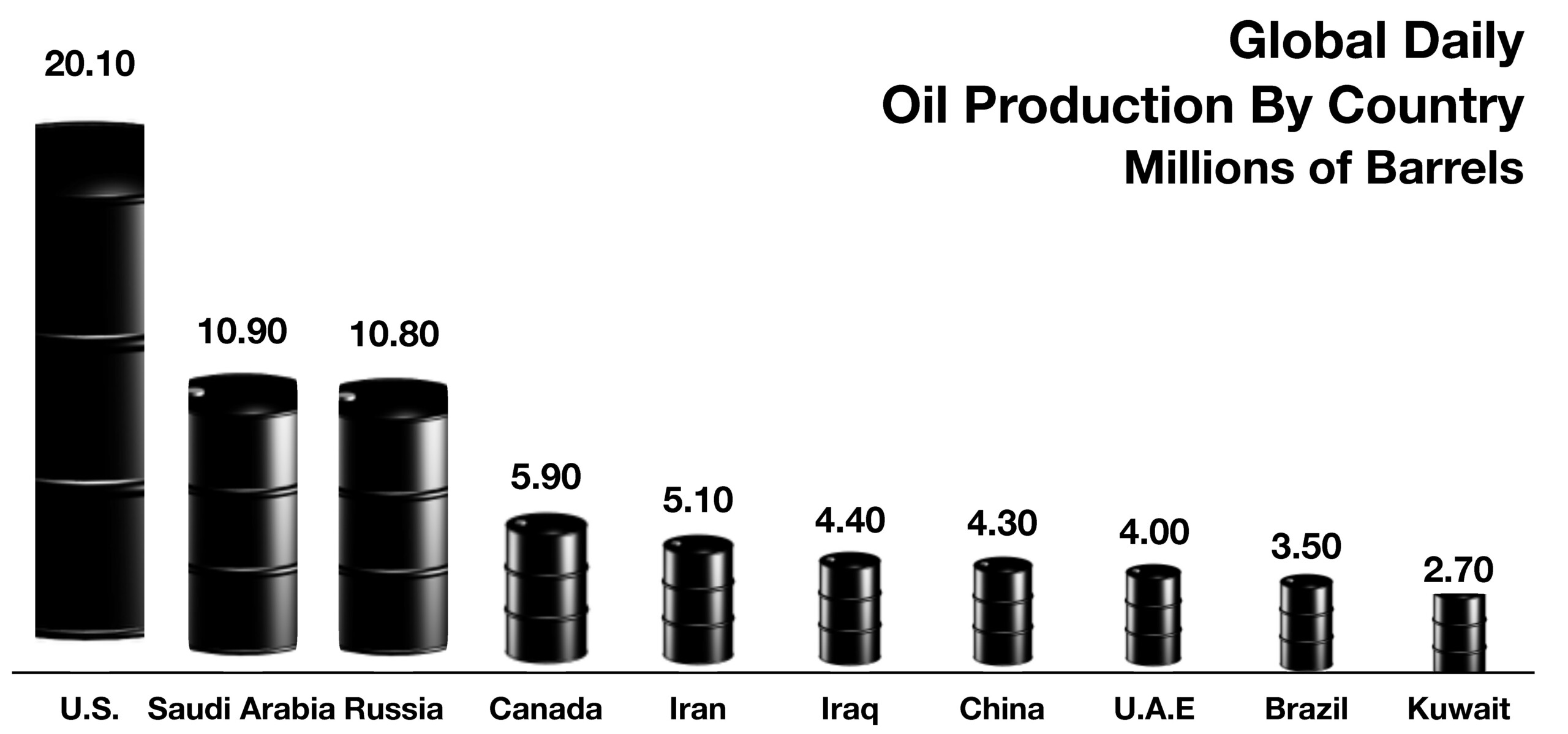
The United States is currently the world’s largest producer of oil and natural gas, positioning it as a critical energy supplier to countries across the globe. Disruptions to oil and liquefied natural gas shipments through the Strait of Hormuz have driven energy prices higher worldwide. Roughly 20% of global oil flows through the Strait en route to Europe, Asia, and the U.S. Oil imported into the United States is largely intended for refining, as the U.S. processes roughly 20% of the world’s crude supply.
Higher oil prices abroad have pushed gasoline prices higher in the U.S., reflecting supply disruptions stemming from the Middle East conflict. Historically, prolonged supply shocks have been partially offset by the United States’ capacity to expand drilling and production when necessary. Elevated oil prices tend to incentivize U.S. drillers and producers to boost output, as wider profit margins encourage increased investment and production.
The technology employed by U.S. energy companies is widely regarded as unmatched globally. Advances in hydraulic fracturing, commonly known as fracking, along with improvements in horizontal drilling, have positioned the United States at the forefront of oil-extraction technology. Notably, natural gas is a byproduct of the fracking process and now accounts for roughly 75% of total U.S. natural gas production.
Sources: U.S. Dept. of Energy, International Energy Agency