
Stock Indices:
| Dow Jones | 50,906 |
| S&P 500 | 7,651 |
| Nasdaq | 26,861 |
Bond Sector Yields:
| 2 Yr Treasury | 4.88% |
| 10 Yr Treasury | 5.29% |
| 10 Yr Municipal | 4.13% |
| High Yield | 8.16% |
YTD Market Returns:
| Dow Jones | 5.91% |
| S&P 500 | 11.77% |
| Nasdaq | 15.57% |
| MSCI-EAFE | 8.05% |
| MSCI-Europe | 3.83% |
| MSCI-Far East | 19.22% |
| MSCI-Emg Mkt | 21.40% |
| US Agg Bond | -2.91% |
| US Corp Bond | -3.11% |
| US Gov’t Bond | -2.85% |
Commodity Prices:
| Gold | 4,189 |
| Silver | 60.75 |
| Oil (WTI) | 90.34 |
Currencies:
| Dollar / Euro | 1.13 |
| Dollar / Pound | 1.32 |
| Yen / Dollar | 157.37 |
| Canadian /Dollar | 0.70 |
Macro Overview
A warning from three of the most influential figures in artificial intelligence has renewed scrutiny of how the technology could affect humanity. The development of superhuman machine intelligence, or SMI, is becoming a growing concern among some scientists and engineers.
Crude exports from the Middle East rebounded in September to their highest level since the war began in February. Shipments through the Strait of Hormuz and alternative routes reached just under 80% of prewar regional volumes by quarter-end.
With a Federal Reserve rate hike widely expected in December, analysts believe equity markets are unlikely to decline after an increase and may even rally. Investors remain focused on AI-driven revenue growth and margin expansion, placing greater weight on those prospects than on the anticipated rate increase.
OPEC continues to face challenges as Saudi Arabia, its largest producer, experiences a sharp drop in output. The kingdom’s crude production fell to its lowest level since 1990 as renewed hostilities between the U.S. and Iran disrupted export routes and constrained supply.
Recent data suggest resilient consumer and business demand is offsetting rising energy costs and supply-chain disruptions tied to the conflict with Iran. Such domestic strength often helps economies withstand geopolitical turmoil abroad.
Government bond yields have climbed worldwide, with the yield on the 10-year Japanese government bond surpassing 3% in September, its highest level since 1996. Yields also rose in Germany, South Korea, France, the U.K., Italy, Australia and the United States.
U.S. consumer sentiment, measured by the University of Michigan Consumer Sentiment Index, fell to a four-month low in September amid growing concerns over inflation and economic growth. The index declined to 48.1 from the prior month, while year-ahead expectations dropped to their lowest level since 2022.
A growing number of fixed-income analysts believe the Federal Reserve’s campaign to curb inflation through further rate increases could tip the economy into recession. Borrowing costs have risen across mortgages, auto loans, credit cards and personal loans, prompting consumers to reassess future spending plans. This assessment stands in stark contrast to the current strength of equities markets and spending trends.
More than 34,600 people died from heat-related causes across five Western European countries this summer as the region recorded its hottest June, July and August on record.
An increasing number of equity analysts expect strong earnings growth in the fourth quarter of 2026, providing support for major stock indexes heading into 2027.
Sources: Federal Reserve, Treasury Dept., Univ. of Michigan, OPEC, Bloomberg
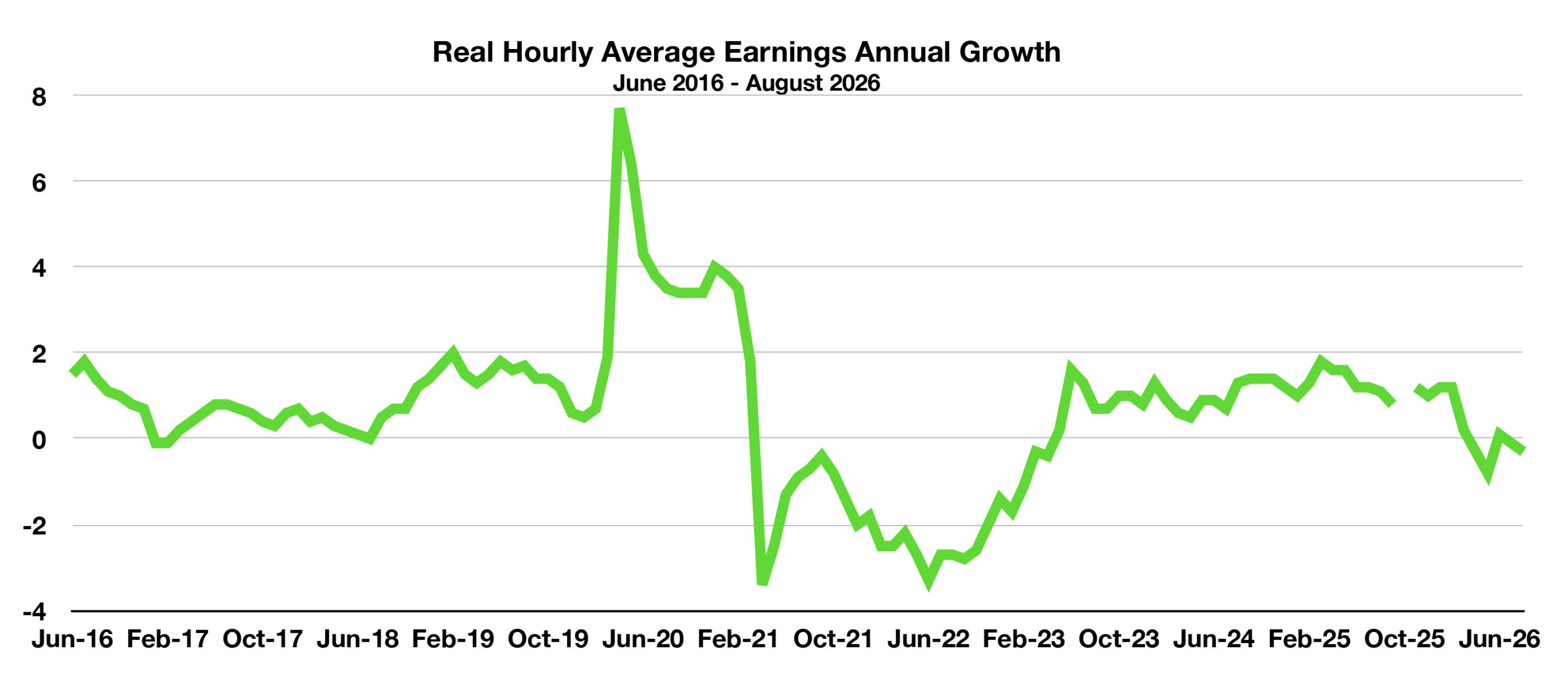 The Federal Reserve Bank of Richmond reported that consumer spending accelerated in August at its fastest pace in more than a year, while government data showed stronger sales of automobiles, apparel and restaurant services. To sustain spending, households have tapped a range of resources, including home-equity lines of credit and AI-powered tools that help shoppers find discounts. Economists are increasingly questioning how long consumers can maintain current spending levels. Any decline in interest rates could provide relief by reducing variable borrowing costs and easing pressure on household budgets. (Source: Federal Reserve)
 Advances in refining technology and transportation infrastructure have helped moderate gasoline prices despite a surge in demand. In the early 1900s, limited production and distribution made gasoline relatively expensive and difficult to obtain, as service stations were scarce. Today, about 150,000 gasoline stations operate across the United States, according to data from the Bureau of Transportation Statistics.
 Various factors influence home prices, including housing supply, economic conditions, labor-market strength, demographics and interest rates. Insurance costs are becoming an increasingly important factor, particularly in coastal and wildfire-prone regions, where homeowners face rising premiums and, in some cases, unexpected policy cancellations. Sellers nationwide have begun lowering asking prices, contributing to softer home values. The average home-sale price has fallen from $541,000 over the past year to $500,000, a decline of roughly 7.5%. As listing prices move lower, buyers have gained greater negotiating leverage, creating opportunities to secure more favorable terms and reduce monthly mortgage payments. (Sources: Freddie Mac)
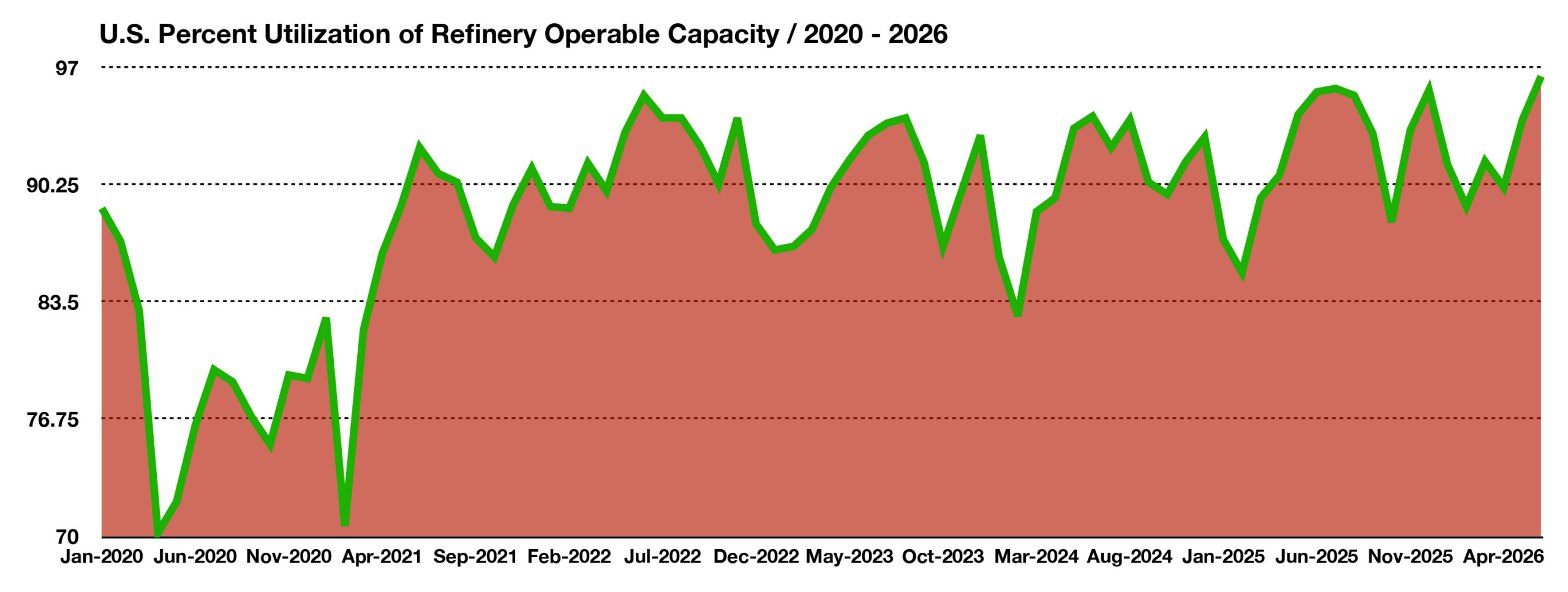 Advances in drilling and hydraulic fracturing have driven steady growth in U.S. oil production over the past several years, increasing demand for refining capacity. The U.S. oil industry traces its roots to the 1850s, when commercial drilling first emerged in Pennsylvania. Early growth was limited by the need to build pipelines to transport crude oil and refineries to convert it into products such as gasoline. Because refinery construction and operation are complex, costly and heavily regulated, refining capacity has struggled to keep pace with production growth. More than 90 U.S. refineries have closed since 1990, contributing to tighter domestic refining capacity. In 1990, the United States produced roughly 9 million barrels of oil per day. As of last month, output was approaching 14 million barrels per day. Rising production combined with limited refining capacity has created bottlenecks that can contribute to higher gasoline prices. (Sources: Library of Congress, U.S. Dept. of Energy)