| Dow Jones | 53,185 |
| S&P 500 | 7,686 |
| Nasdaq | 26,370 |
| 2 Yr Treasury | 4.34% |
| 10 Yr Treasury | 4.75% |
| 10 Yr Municipal | 3.38% |
| High Yield | 7.02% |
| Dow Jones | 10.66% |
| S&P 500 | 12.28% |
| Nasdaq | 13.46% |
| MSCI-EAFE | 11.77% |
| MSCI-Europe | 8.87% |
| MSCI-Far East | 18.96% |
| MSCI-Emg Mkt | 22.43% |
| US Agg Bond | -0.31% |
| US Corp Bond | -0.40% |
| US Gov’t Bond | -0.45% |
| Gold | 4,497 |
| Silver | 67.24 |
| Oil (WTI) | 86.25 |
| Dollar / Euro | 1.15 |
| Dollar / Pound | 1.35 |
| Yen / Dollar | 160.09 |
| Canadian /Dollar | 0.71 |
Macro Overview
Continued disruptions in the Strait of Hormuz, coupled with escalating tensions with Iran, intensified inflationary pressures and heightened uncertainty across global markets. Expectations for additional Federal Reserve rate hikes, combined with concerns over fiscal deficits, pushed long-term Treasury yields to multi-year highs in August.
GDPNow data from the Federal Reserve Bank of Atlanta projects third-quarter GDP growth of 4.6%. The forecast reflects an expanding economy, with manufacturing and construction activity increasing nationwide. Such strong projections could be viewed as inflationary by the Federal Reserve if the pace of economic growth proves sustainable.
Consumer frustration appears to be mounting as gasoline prices reached a national average of $4.20 per gallon at the end of August. Prices had declined to roughly $3 per gallon in early February amid hopes for a resolution to geopolitical tensions involving Iran.
Global bond yields rose in August as concerns over mounting debt increased alongside continued government borrowing. Government bond yields in Japan, Germany, Britain, and France advanced in tandem with U.S. Treasury yields. Global yields climbed to their highest levels in nearly two decades, while the 30-year Treasury yield surpassed 5.3%, its highest level since 2007.
U.S. national debt reached $40 trillion in August, rising by more than $3 trillion over the past year. Elevated short-term interest rates have significantly constrained government efforts to address growing debt levels. Fiscal initiatives have also contributed to increased borrowing and expanding debt burdens, placing additional pressure on budgetary priorities and limits.
Economic activity in the manufacturing sector expanded in July for the seventh consecutive month, according to the latest ISM Manufacturing PMI Report. Growth in manufacturing has been supported by data center expansion, construction activity, and energy-related production aimed at meeting rising demand for electricity and natural gas.
Companies are increasingly paying for consumer data to obtain large-scale datasets that can be analyzed to better train AI models. These models are being used to more effectively understand and predict consumer preferences and behavior.
Bond markets are responding to growing demand for capital from both U.S. companies and the federal government. This expanding need for funding is pushing borrowing costs higher in the form of elevated bond yields. Rising rates are also filtering through to consumers, contributing to higher mortgage and auto loan costs.
Many economists believe the proliferation of AI is beginning to influence wage dynamics. Average hourly earnings rose at their slowest pace since 2021 in August, while the average workweek posted its largest increase in two years. Companies are expected to benefit as AI integration supports profit growth and reduces labor-related expenses.
Sources: BLS, Federal Reserve, Treasury Dept., ISM, Dept. of Energy
Treasury Yields Rise In August – Fixed Income Overview
Yields on 30-year U.S. Treasuries climbed in August to their highest level since 2007, driven by persistent inflation concerns and stronger-than-expected employment data.
The Treasury Department intervened to help stabilize the Japanese yen, marking the first U.S. purchase of the currency since 1998. Washington has a vested interest in supporting the yen, as Japan remains the largest foreign holder of U.S. government securities.
The Federal Open Market Committee raised their target interest rate range by 25 basis points to 3.75-4% on September 16th due to continued inflationary pressures. Fed officials are now projecting one more hike of 25 bps in 2026. (Source: U.S. Treasury)
Equities Struggle To Rebound – Equity Markets Overview
A resurgence of hostilities in the Strait of Hormuz increased equity-market volatility in August as further restrictions on oil shipments pushed crude prices higher. As a result, the S&P 500 energy sector outperformed all other sectors during the month and has remained the best-performing sector year to date.
Better-than-expected earnings from many U.S. companies, combined with steady economic growth, helped offset some market volatility and supported sectors such as manufacturing and energy.
For the second consecutive month, mid-cap and small-cap stocks underperformed their large-cap counterparts, a pattern that has historically accompanied rising interest rates. Borrowing costs for smaller companies tend to increase as rates rise, while larger firms are generally less affected because of stronger balance sheets and greater cash flow. (Sources: S&P, Bloomberg)
How Companies & The U.S. Government Are Competing For Capital – Capital Markets Overview
U.S. government borrowing has increased alongside a surge in corporate financing needs as companies accelerate spending on the buildout of AI infrastructure.
The challenge for the federal government is the cost of servicing its $40 trillion debt load, which now exceeds $1 trillion annually in interest payments. A fiscal deficit of roughly $2 trillion continues to add to the burden, as government spending far outpaces revenue. To finance the shortfall, the Treasury issues and sells additional bonds to investors.
In the private sector, U.S. companies have launched a major borrowing campaign to fund nearly $800 billion in infrastructure investments tied to the nationwide expansion of AI capabilities. Like the federal government, these companies rely on bond issuance to finance substantial capital expenditures.
Capital markets bring together borrowers and investors, creating competition for available funding as both corporations and the government seek to raise capital through bond sales. As the supply of bonds increases, borrowing costs tend to rise for both issuers, putting upward pressure on interest rates across the economy. (Sources: Treasury Dept., Congressional Budget Office)
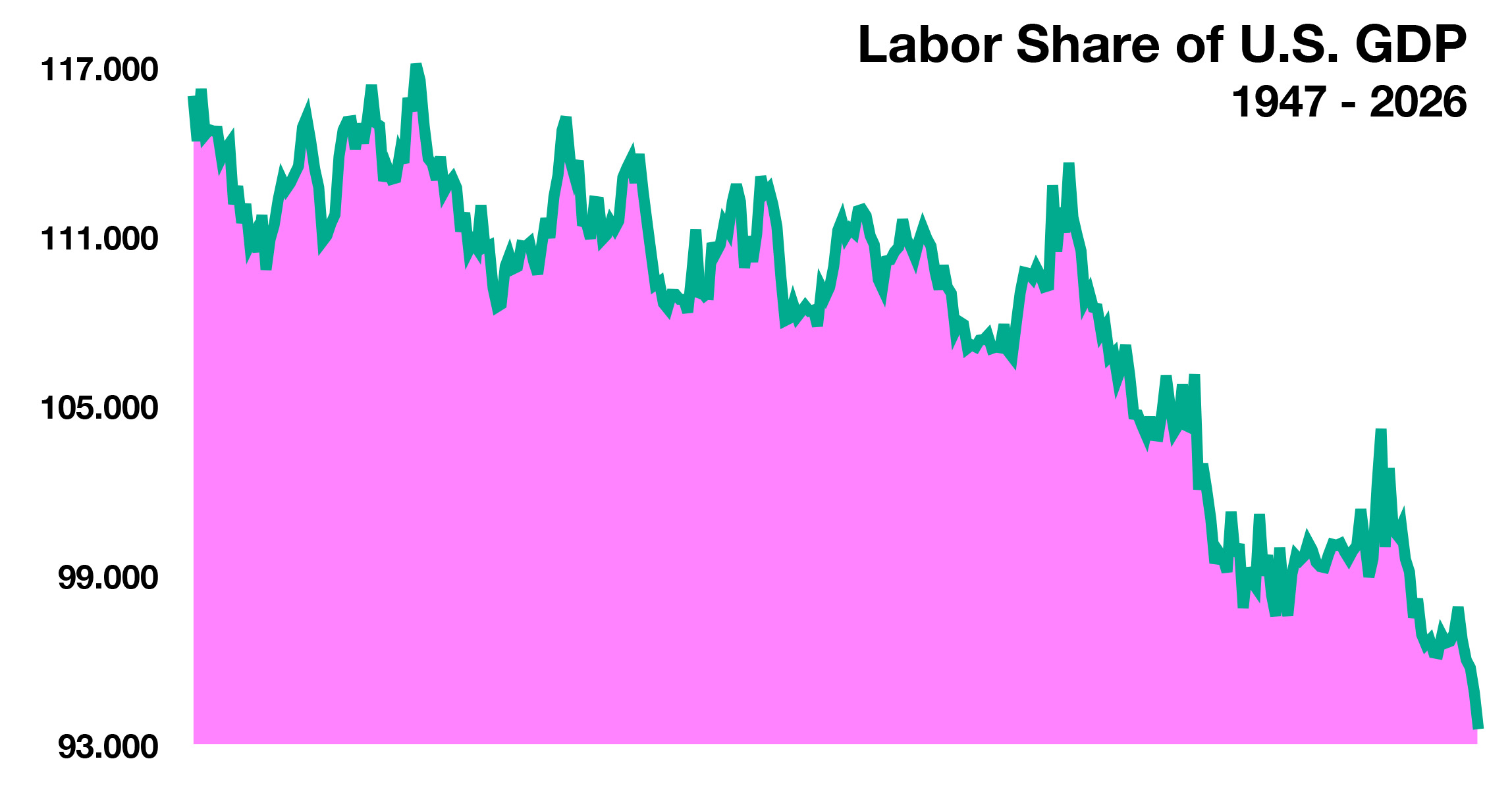
Labor Share Of GDP Lowest Since 1947 – Employment Market Update
The labor share of GDP measures the portion of a nation’s economic output that is paid to workers in the form of wages, salaries, and benefits rather than distributed to capital owners and shareholders. The metric, which dates back to 1947, has generally trended lower since peaking during the pandemic in 2020. The extent to which economic growth translates into income for U.S. workers remains a key determinant of the long-term health of both consumers and businesses.

The growing integration of AI into the workforce has begun to moderate hiring trends across a range of industries. As companies deploy AI to perform certain tasks and functions, workers may face fewer opportunities for wage growth and career advancement.
In theory, AI could make U.S. workers more productive and efficient, potentially accelerating economic growth and enabling both employees and businesses to generate higher incomes without fueling inflation. Conversely, if companies determine that replacing workers with AI is a more effective way to increase profits, the result could be fewer employment opportunities and greater downward pressure on wages. (Sources: Labor Dept., BLS)
How IRMAA Affects Your Medicare Premium – Medicare & Social Security Update
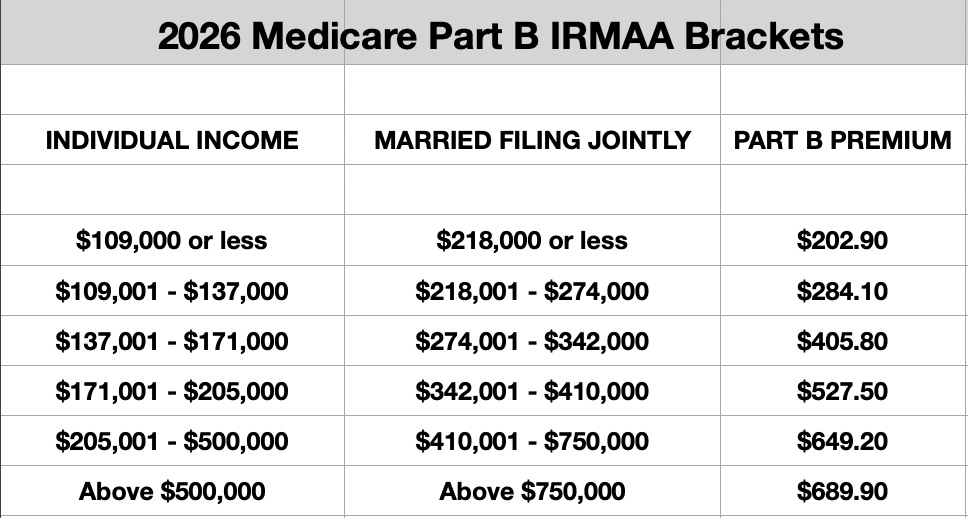
Medicare premium adjustments are affecting a growing number of retirees, making it important to monitor annual income thresholds. The adjustment, known as the Income-Related Monthly Adjustment Amount (IRMAA), is an additional Medicare charge assessed on beneficiaries whose income exceeds specified limits. It applies to individuals enrolled in Medicare Part B and/or Part D coverage. The IRMAA surcharge is paid in addition to a beneficiary’s standard monthly Medicare premium.

The IRMAA is calculated using modified adjusted gross income (MAGI) reported on a taxpayer’s federal income tax return. Determinations are based on the tax return filed two years prior, meaning a 2026 IRMAA assessment would be calculated using 2024 tax return data. For IRMAA purposes, MAGI includes adjusted gross income plus any tax-exempt interest income.
Conversely, Medicare beneficiaries who experience a reduction in income may request a recalculation to qualify for a lower IRMAA surcharge and reduced Medicare premiums. One-time income events, such as the realization of significant capital gains, can also increase MAGI and result in higher Medicare premium surcharges. (Sources: Social Security Administration)
U.S. Leads In Projected Global Growth – Global Economy
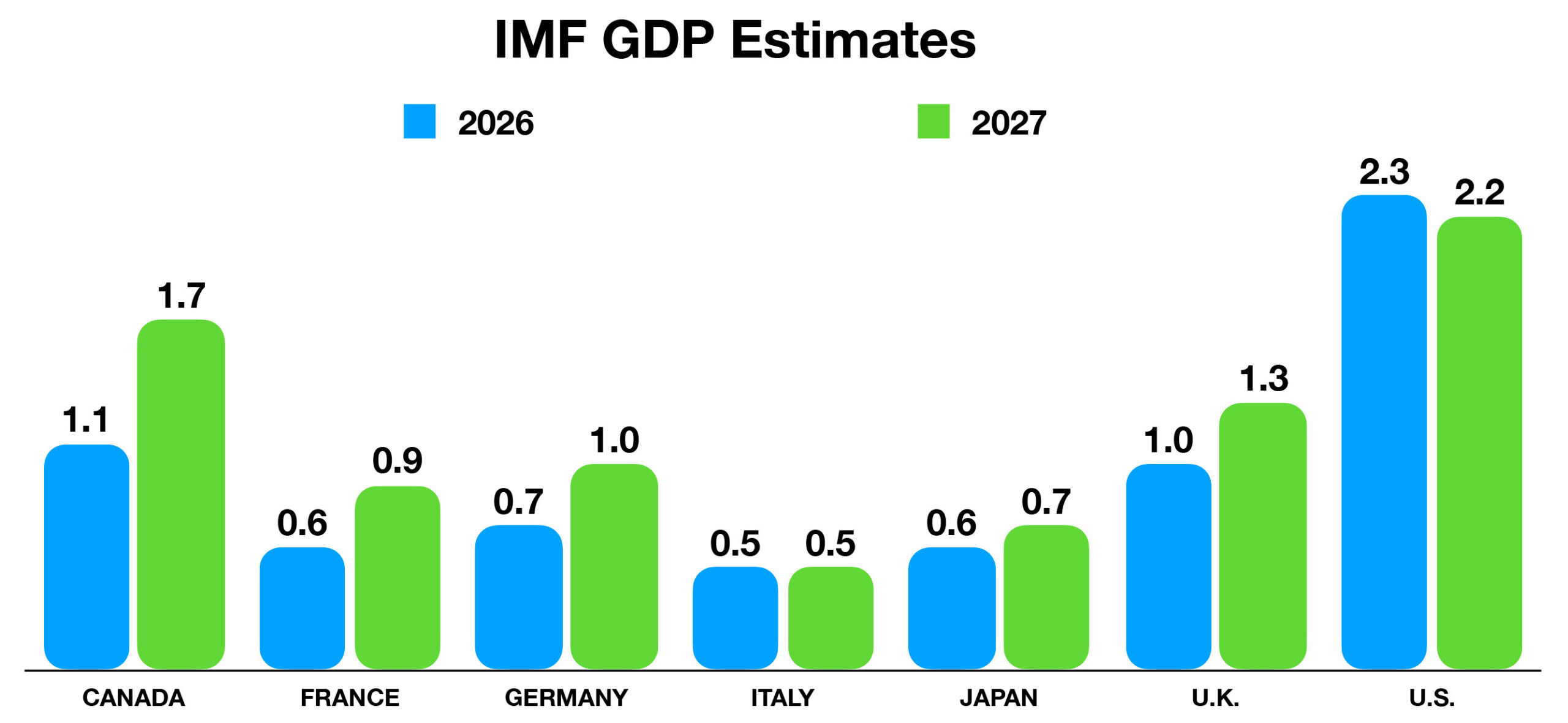
Among developed economies, the United States is projected to lead GDP growth this year and again in 2027. Looking ahead, the country’s demographic profile and continued technological innovation are expected to support faster economic expansion than that of many other advanced nations. Projections from the International Monetary Fund provide ongoing insight into the outlook for global economic growth.

Emerging economies such as India, China, Saudi Arabia, and Indonesia are expected to post faster economic growth than the United States, driven largely by younger populations and favorable demographic trends.
Aging populations across Europe are placing growing pressure on current and future workers through rising pension obligations and shrinking labor forces. An unemployment rate of 6.3% across the European Union also weighs on economic expansion and productivity. Japan and Canada face similar challenges, as labor-market constraints and fiscal pressures continue to limit growth potential.
The International Monetary Fund (IMF) bases its GDP forecasts primarily on data reported by national statistical agencies in member countries, which it standardizes and incorporates into its own economic analysis and projections. These forecasts play a critical role in assessing future energy demand and capital requirements as developed and emerging economies expand or contract from year to year.
Source: International Monetary Fund